SeaPRwire – Omen AI will pay $16 million in cash and stock for Aquatic Labs, a competitor that had been building its own real-time sensor for the water running through data center cooling loops. The company confirmed the deal on Monday.
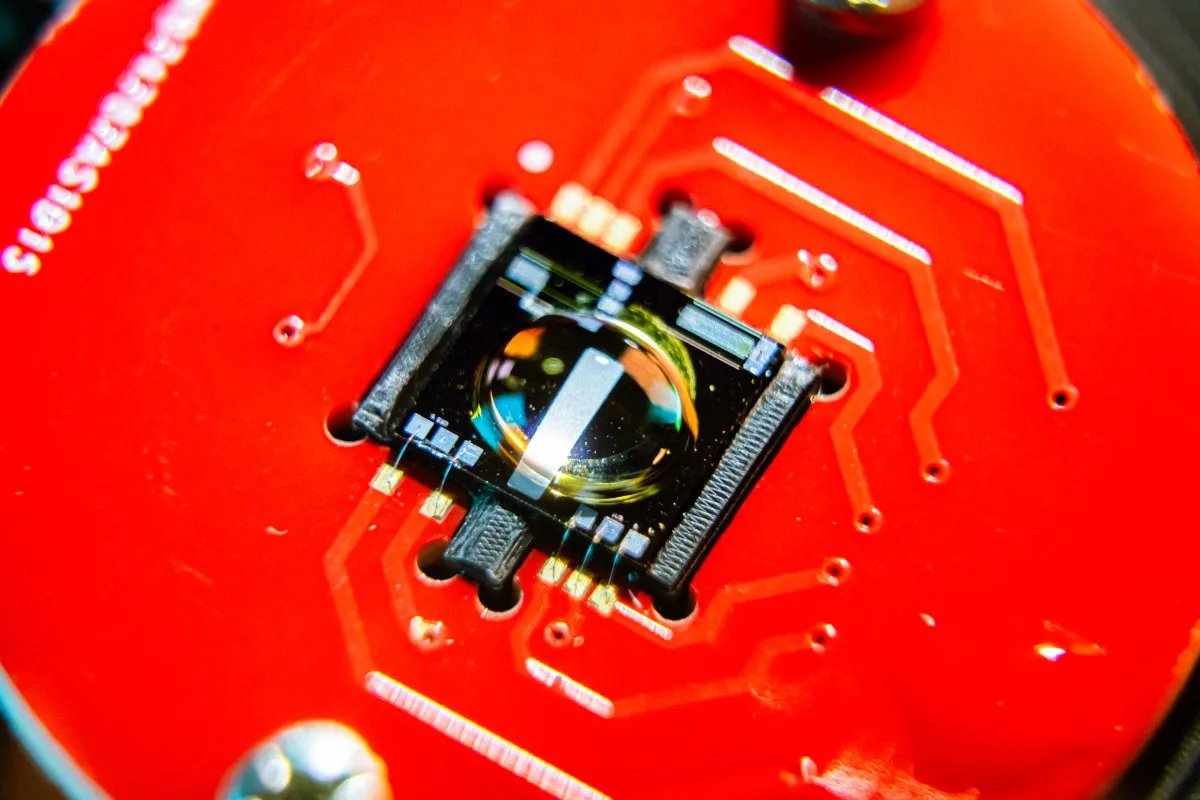
The two products measure different things. Omen’s sensor looks for elements dissolved in the fluid; Aquatic Labs’ looks at alkalinity. Putting both into one housing is supposed to give operators a reading they can act on instead of a number they have to interpret against a lab report that arrives three days later.
The two measurements catch different failures. Corrosion and scale begin in the chemistry of the loop, and biological growth usually announces itself as a pressure drop that nobody reads until a heat exchanger is already fouled. A probe that reports both also cuts the number of sampling kits a facilities team keeps on site, which is the operational argument for consolidation. It is not an argument that either metric is better than the other.
Cooling fluid is where a lot of money quietly disappears. When a valve starts to fail or bacteria take hold in a loop, the cheaper response is usually to dump the water and refill rather than risk fouling the equipment it protects. That means stopping work on racks worth more than the water ever was. Keeping the same fluid in service longer is the entire commercial case for monitoring it continuously, and it is a case Omen has been making since it raised a $31 million Series A in June (techcrunch.com/2026/06/29/omen-ais-plan-to-optimize-data-centers-is-all-wet/).
The founders arrived from opposite directions. Zach Laberge left high school to start a company that ran fluid analysis for construction machinery dependent on hydraulics. Allan Adams spent most of his career as a physicist building ocean sensing instruments at MIT and the Woods Hole Oceanographic Institution before founding Aquatic Labs. Adams is now Omen’s chief science officer; Laberge runs the company.
Their integration target is a single sensor, expected on the market early next year. Omen says its current units will be monitoring chips drawing 250 to 300 megawatts of power by the end of 2026, a slice of installed capacity Laberge puts at roughly $5 to $7 billion, with a goal of covering the equivalent of a gigawatt by the end of 2027.
Put those numbers against the water itself. Data centers in the United States use 17 to 19 billion gallons a year for cooling, according to The Water Foundation, and that figure is expected to triple within five years. A monitoring product that reduces how often a facility drains and refills its loops touches both the water bill and the discharge permit, which is why Adams frames the municipal end of the pipe as part of the same problem: fluid leaves the building and enters a public system, and someone has to be able to show what is in it.
The demand side has become noisier. Companies once floated as much as $4 trillion in AI infrastructure spending by 2030 (techcrunch.com/2026/02/28/billion-dollar-infrastructure-deals-ai-boom-data-centers-openai-oracle-nvidia-microsoft-google-meta/), and investors have spent recent weeks marking down the companies paying for it (techcrunch.com/2026/10/30/cracks-are-emerging-in-the-ai-spending-boom/). Omen’s answer is that its customers are not the ones deciding whether to build. “We’re working [with] customers on stuff they’re building today or have already built, and so it doesn’t really affect us because all of those projects were financed 12 months ago,” Laberge said. “Our view is, if there’s tightness, this is still going to be the biggest market in human history, even if you sliced it in half.”
That argument holds for the next several quarters and gets weaker after that. A sensor installed in a plant that broke ground in 2025 is revenue no matter what happens to construction starts in 2027. A pipeline that depends on new plants does not have that protection, and the company has not said how much of its booked business runs past the current build cycle.
The deal also thins out the supply side. Operators weighing continuous water monitoring have had at least two small vendors to compare against each other; after this acquisition, one of them belongs to the other. Nothing in the announcement says whether existing Aquatic Labs customers keep their contracts and their sensor firmware on the same terms.
The engineering claim needs the same kind of scrutiny. Merging an ion sensor and an alkalinity sensor into one package is a materials problem as much as a software one: the two measurements want different conditions, and a combined probe has to hold calibration across the water chemistries used in different climates and different cooling designs. Omen has not published field data showing drift rates for the combined unit.
The combined unit does not exist yet.
Adams describes the result as a much richer picture of the water and the fluid. Richer is not the same as validated: the company has published no comparison of its readings against laboratory results, which is the standard the permits currently rest on.
There is also a question of who the buyer becomes. Data center operators buy uptime. Water utilities buy compliance, on annual budget cycles, through procurement processes that treat new instrumentation as a capital item to be piloted for a year. Adams wants the same sensors measuring discharge into municipal systems, which is a reasonable extension of the technology and a much slower sales motion than the one Omen has been running with hyperscale tenants.
What the deal actually buys, then, is a competitor’s chemistry expertise and a founder who can talk to scientists, paid for partly in stock. Sixteen million dollars is small against the cost of a single loop shutdown at a large campus, which is the comparison Omen would like operators to make. It is also small enough that the company will need another round before the combined sensor has a track record.
Two things are checkable from here. Whether the integrated unit ships on the timeline the company gave, and whether operators will accept continuous readings in place of the lab samples their permits and maintenance contracts currently specify. The second is the harder one, and no sensor specification answers it.