(SeaPRwire) – By: Julian Holbrooke
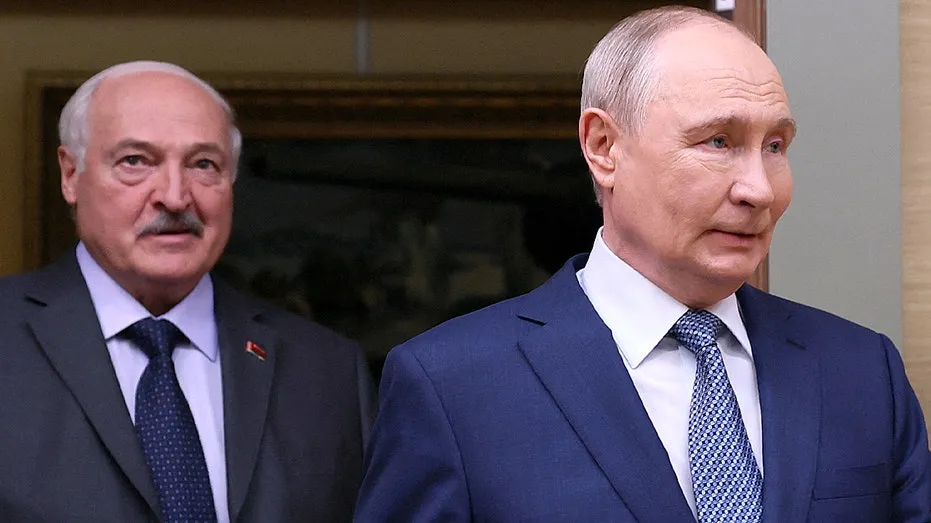
Lukashenko calls it a joke. Europe should not laugh. The Belarusian president stood before youth leaders in Minsk on Sept. 17 and casually revealed that he and Vladimir Putin regularly compete over who deserves the “bigger dictator” title. The room may have chuckled. The implications are anything but funny. This is not stand-up comedy. It is a public confession of shared defiance against the Western order. Europe’s longest-serving head of state jokes about authoritarianism with the Kremlin’s master. The punchline lands near Ukraine’s border. Lukashenko, 72, a former Soviet collective farm manager, has ruled Belarus since 1994. Putin has led Russia since 2012, after an earlier run from 2000 to 2008. Their résumés mirror each other. Their grip on power is mutual.
Read the official words closely. Lukashenko told the “Youth. Belarus. Future.” forum that Western media brand him the “last dictator in Europe.” His response was a shrug. “Dictator — so be it.” He added that he and Putin often argue about which of them is the bigger dictator. Then came succession. He insisted he is not clinging to power. “Never believe those who say that Lukashenko is ‘clinging to power with blue-knuckled hands,'” he said. “I have had my fill of this power to the point where I could not possibly want any more of it.” But he immediately challenged the young audience. “The only question is whether you are capable today of taking over the country and holding on to it.” His verdict was blunt. “I cannot yet answer that question positively.” That is not a leader preparing to step aside. That is a ruler conditioning the nation on his own permanence. He also framed the dictator label as a badge. “I became a dictator then because I stood up against the entire ‘civilized world.'” He wears the insult as armor.
Now stack the military facts against that performance. Belarus has not committed ground troops to the war in Ukraine. It does not need to. It serves as Moscow’s strategic staging ground. According to the Kyiv Post, Belarus provides Russia with key weapons components. It allows Russian forces to launch military strikes from Belarusian territory. An August investigation by Ukrainska Pravda flagged new railway construction capable of handling military trains in Gomel Oblast, near the Ukraine border. Infrastructure does not joke. Neither does the diplomatic calendar. Lukashenko met Putin in Moscow on Aug. 27. On Sept. 21, he congratulated Putin after the Russian election results. He praised the “unprecedented turnout of millions of voters” and the United Russia majority. He called it a proper response to “cynical attempts from the outside to discredit the campaign and sow discord.” Western pressure is real but uneven. Lithuanian Foreign Minister Kęstutis Budrys insists the pressure campaign must remain. “We have to be very exact and continue what works, and that is the pressure on the regime,” he said. Yet on Sept. 11, Belarus announced it had begun selling potash to the United States. U.S. sanctions on Belarusian potash were lifted after political prisoner releases. European Union sanctions remain active. The transatlantic front is cracking.
The “bigger dictator” joke is not innocence. It is a negotiation between two men who have fused their regimes. Lukashenko needs Putin more than Putin needs Lukashenko. The railway tracks in Gomel Oblast point in one direction. Weapons components flow one way. Political cover flows back. Lukashenko gains protection from a hostile West. Putin gains a staging ground within striking distance of Kyiv. That is the actual argument being settled between them. Not who is the bigger dictator. Who holds the leash. The geopolitical pendulum is not swinging toward democracy. It is locking into a single authoritarian axis. Europe’s longest-serving head of state is not preparing for succession. He is preparing for permanent siege. And he wants Moscow standing beside him when the walls close in.
Author bio: Julian Holbrooke, an overseas international relations analyst who frequently contributes to major European daily newspapers.