(SeaPRwire) – By: Julian Holbrooke
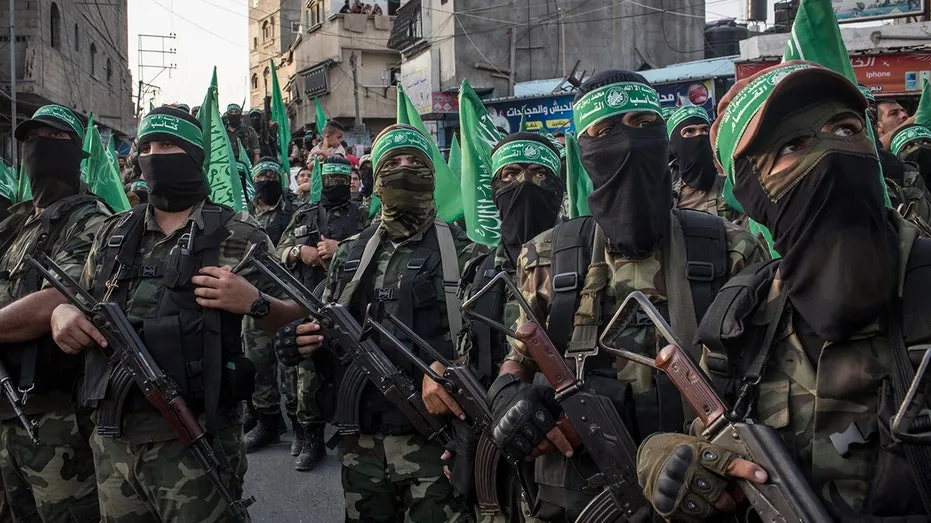
Hamas’s announcement to dissolve Gaza’s emergency committee is a masterclass in political theater, a hollow gesture designed to placate international mediators while preserving the group’s iron grip on power through its weapons and security apparatus. This is not governance reform; it’s a strategic feint, exposing the fundamental fault line in any post-war plan: the irreconcilable gap between symbolic political concessions and the hard reality of militant disarmament. The move tests not just the Trump administration’s framework, but the international community’s capacity to see through a blatant attempt to replicate the Hezbollah model of state-within-a-state control.
[Official Statement Text]: Hamas announced on Monday the dissolution of the committee overseeing Gaza’s civilian government. The stated aim is to clear the way for the U.S.-backed National Committee for the Administration of Gaza (NCAG), a technocratic body currently based outside the territory, to take over civilian affairs. The Trump-led Board of Peace responded with cautious skepticism, stating its assessment would be “guided by actions, not promises.” The United Nations offered a cautiously positive response, welcoming any step that contributes to ceasefire implementation and humanitarian aid. Crucially, the announcement contained no commitment to disarm, which remains Israel’s central demand and a core element of the proposed post-war framework.
[Geopolitical Real Intentions]: Behind the communique lies a calculated maneuver to offload the burdens of civilian administration—garbage collection, municipal services—while retaining the real sources of power. As Gazan teacher Alaa Abo Naddi notes, the committee being dissolved was never the source of Hamas’s authority. “In reality, even a low-ranking Hamas security officer can overrule them,” he said. Hadeel Oueis, editor of Jusoor News, labels it a “performative step.” The intent, analysts suggest, is to throw the ball into Israel’s court, framing Hamas as cooperative and Israel as obstructive. Michael Milshtein of Tel Aviv University assesses the step is coordinated with regional backers like Egypt, Qatar, and Turkey, aiming to advance a stalled arrangement through a gradual, partial disarmament process rather than immediate surrender.
The immediate Israeli reaction, from Foreign Minister Gideon Sa’ar, cuts to the core. He accuses Hamas of seeking a Hezbollah-style arrangement, where an armed organization dominates militarily while civilians handle services. “They don’t care if others collect the garbage… if Hamas will remain the dominant military force,” Sa’ar stated. This rejection underscores the zero-sum nature of the security dilemma. Germany’s Foreign Minister Johann Wadephul backed this, insisting Hamas must relinquish both weapons and de facto control. The real test, as Milshtein concludes, is whether the NCAG can enter Gaza, operate independently, and exercise genuine authority while Hamas cedes security and military control—a prospect currently absent from the equation.
The geopolitical pendulum is not shifting toward a stable resolution but toward a protracted, managed conflict. Hamas’s gambit reveals a strategy of strategic patience, using diplomatic processes to entrench its military dominance under a veneer of political compromise. The international community’s tepid, process-oriented responses risk legitimizing this duality. The outcome will not be determined by committee formations or symbolic dissolutions, but by the unresolved, physical question of who controls the guns. Until that is addressed, every political announcement is merely noise masking the steady rhythm of a long-term, low-intensity struggle for ultimate sovereignty.
Author bio: Julian Holbrooke, an overseas international relations analyst who frequently contributes to major European daily newspapers, specializing in decoding official rhetoric to reveal underlying geopolitical maneuvers and security realities.