(SeaPRwire) – By: Julian Holbrooke
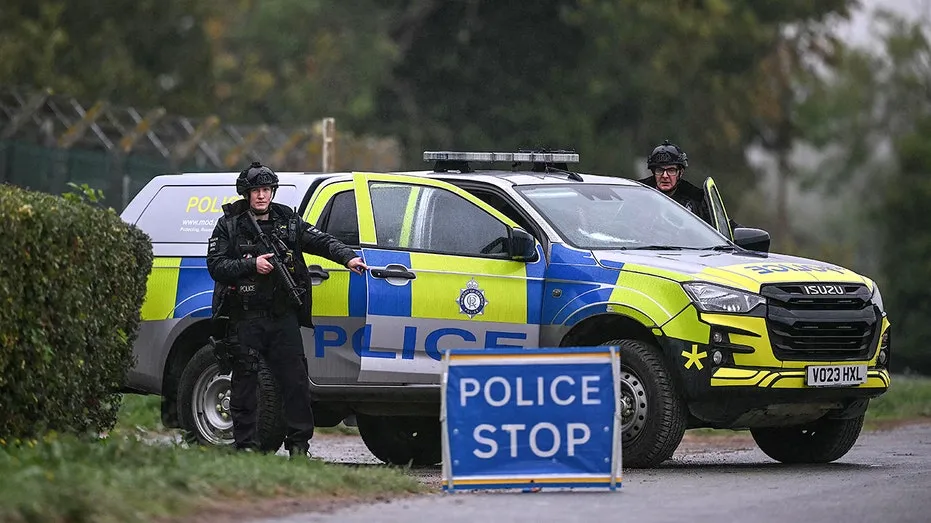
Five vans, packed with explosives, stopped a mere 350 yards from RAF Fairford. The base hosts U.S. air strikes against Tehran. The arrest happened days after British Foreign Secretary Ed Miliband shook hands with Iran’s top diplomat at the United Nations. This proximity is not coincidental. It is the raw, bleeding edge of a policy that tries to befriend a regime while hosting its targets on British soil. The plot reveals a fundamental failure of statecraft. Security services cannot protect a base from a state actor if the diplomatic track signals appeasement.
The official narrative from the British government is one of procedural caution. They refer journalists to the ongoing investigation. They claim the Foreign Secretary reiterated that Britain will not tolerate intimidation on its soil. But the text of the meeting tells a different story. Miliband spoke of de-escalation and the reopening of the Strait of Hormuz. He took a friendly picture with Iranian Foreign Minister Abbas Araghchi. He avoided meeting any Israeli representative. This is the first layer of the fact. The second layer is the subtext. By engaging Tehran diplomatically while the U.S. and Israel launched a joint campaign on Feb. 28 to knock out Iran’s nuclear systems, London has placed itself in an impossible tactical position. The diplomatic channel is open, but the military channel remains hot.
The Iranian response is telling. Their embassy in London categorically rejects the link between the regime and the suspects. They call the speculation “fabricated” and accuse Western media of fueling “Iranophobia.” This is standard state denial. It serves no purpose other than to delay attribution. What matters is the prior warning. In July, the Islamic Revolutionary Guard Corps put the British government on notice that military installations used to attack Iran are legitimate targets for retaliation. Jason Brodsky from United Against Nuclear Iran points out that Iranian media specifically dubbed RAF Fairford “an important matter for our self-defense.” The link is not speculative. It is a declared policy. The five suspects, arrested under the Explosives Act, are likely proxies. Iran has a long history of using criminal gangs to mask its involvement. The release of these suspects on bail, as noted by Nile Gardiner of the Heritage Foundation, signals a weakness in the domestic security apparatus that Tehran is exploiting.
The geopolitical pendulum is swinging toward a proxy war in Europe. Britain has no sense of how to prioritize its national security interests. It wants the economic stability of de-escalation but refuses to accept the security costs of the U.S.-led war against Tehran. The result is a target-rich environment on British soil. The next move will not be diplomatic. It will be kinetic. Until London aligns its diplomatic signaling with its military hosting reality, the threat of Iranian-orchestrated terror remains a living, breathing reality in the UK.
Author bio: Julian Holbrooke, an overseas international relations analyst who frequently contributes to major European daily newspapers