(SeaPRwire) – By: Julian Holbrooke
The Ghana reparations plan isn’t just a list of demands. It’s a direct challenge to the global power structures built on the bones of transatlantic slavery. For centuries, at least 12.5 million Africans were kidnapped and shipped across the Atlantic. Their labor built the wealth of Western nations. Today, their descendants in Africa and the Caribbean still live with intergenerational scars—poverty, systemic inequality, and debt traps. For decades, these nations pushed for redress alone. Now, they’ve merged their voices into a single, unignorable force. The silence on specific target nations isn’t a flaw. It’s a strategic choice to avoid splitting the coalition before the UN General Assembly.
Officially, the 19-point framework adopted by the African Union and CARICOM calls for financial compensation, debt relief, a Global Reparations Fund, and the return of looted cultural artifacts and ancestral remains. It also demands reforms to international financial institutions that supporters say disadvantage Third World countries. It includes expanded citizenship pathways for Africans in the diaspora and a “right of return” for descendants of enslaved people. Behind the words, this plan is about systemic repair. Debt cancellation isn’t just about easing current burdens. It’s about undoing a cycle where former slave powers now profit from the very nations they once exploited through predatory lending. The unified front between AU and CARICOM turns scattered grievances into a geopolitical bargaining chip that can’t be dismissed as a regional complaint.
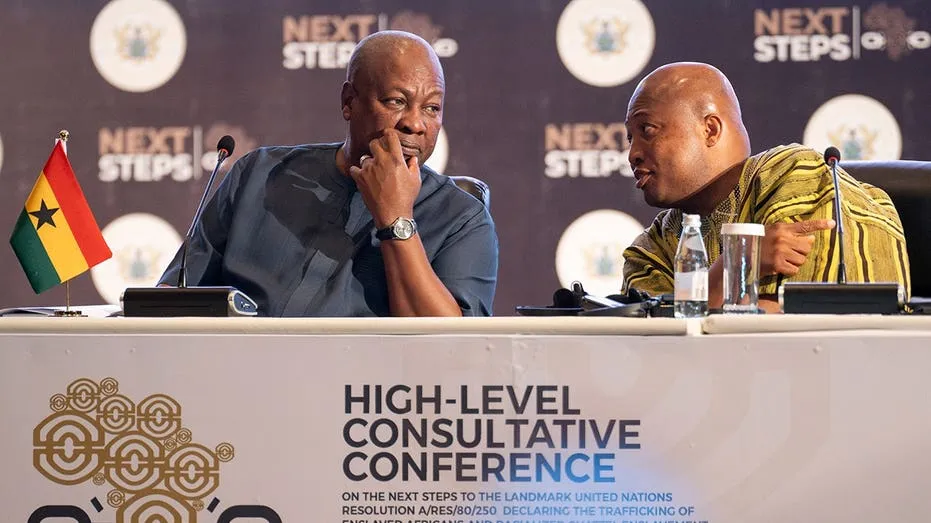
Officially, the March UN resolution recognizing slavery as the “gravest crime against humanity” passed with 123 votes. The U.S., Israel, and 52 others opposed or abstained, citing concerns over creating a hierarchy of crimes against humanity. Behind this opposition lies a deeper fear. If slavery reparations are legitimized, Western nations could face demands for redress for other colonial atrocities—from land theft to resource exploitation. French President Emmanuel Macron addressed the Ghana conference virtually, acknowledging that enslaved people were “torn from their homelands, deported, dehumanised, and treated as goods.” But he rejected reparations as a “cheque to close the story.” This is a classic soft power play: acknowledge guilt without offering tangible redress, preserving France’s influence in its former African colonies while avoiding financial liability. Heads of state from Namibia, Liberia, Senegal, Barbados, and Sao Tome and Principe attended the conference, a sign of the coalition’s breadth and seriousness.
The geopolitical pendulum is shifting, but the plan’s success hinges on whether African and Caribbean nations can hold their coalition together through the UNGA debates and intense Western pushback.
Author bio: Julian Holbrooke, an overseas international relations analyst who frequently contributes to major European daily newspapers.