(SeaPRwire) – By: Julian Holbrooke
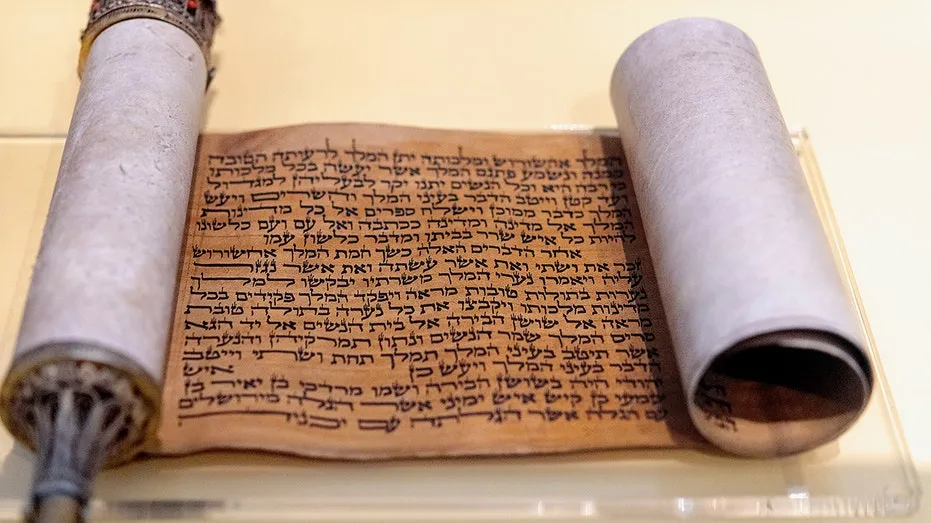
The assertion that the Bible is a “Palestinian book” is not merely a historical error; it is a geopolitical weapon wrapped in academic dress. Ambassador Husam Zomlot’s remarks at the University of Bradford on September 3 mark a dangerous escalation in the narrative war over the Levant. By labeling the Christian and Jewish scriptures as exclusively Palestinian heritage, the argument seeks to retroactively anchor a modern political entity into a time period where it did not exist. This is not about faith. It is about state-building through historical distortion. The move aims to sever the indigenous connection between the land and its oldest recorded civilizational layers, rebranding Judea and Samaria as something entirely new.
Let us look at the stated facts against the historical record. Zomlot argued that “we are the original Christians” and that the Bible has been “rewritten to be used against us.” He cited a private audience with the late Queen Elizabeth II where he declared, “Jesus is our gift to you.” This framing ignores the fundamental chronology of the region. The Roman Empire designated the province of “Palestine” roughly a century after the crucifixion of Jesus, specifically to erase the name Judea and the Jewish connection to the land. To call Jesus Palestinian is to apply a post-imperial administrative label to a first-century Jewish man from Nazareth who observed Sabbath and Passover. It is an anachronism of such magnitude that it collapses under basic scrutiny.
The subtext here is clear. The Palestinian Authority is leveraging institutions like UNESCO to enforce this new historical narrative. Critics point to the 2016 designation of the Cave of the Patriarchs in Hebron under the “State of Palestine” banner, despite its millennia of Jewish burial history. More recently, in 2023, Tell es-Sultan near Jericho was designated a World Heritage site under the same label. There is also the 2021 UN General Assembly resolution that referred to the Temple Mount solely by its Muslim name, Haram al-Sharif, while ignoring its status as Judaism’s holiest site. These moves are not accidental. They are a systematic effort to overwrite archaeological and religious evidence with a contemporary political identity. The goal is to present a unbroken, exclusive claim to the land by erasing the intermediate histories that do not fit the current statehood model.
The danger is not in the slogan itself, but in the institutional platforms that lend it credibility. When a university lecture hall hosts such a revision, it suggests a failure of critical inquiry among the global elite. The response from figures like Pastor John Hagee and Ze’ev Orenstein highlights the absurdity: calling Dr. Phil Cherokee because he was born in Oklahoma is no different than calling Jesus Palestinian because he was born in a territory the Romans later named Palestine. The geopolitical pendulum is swinging toward a world where history is malleable to the needs of statecraft. If the “Book” is a political tool, the land becomes a zero-sum asset. The end-game is a frozen conflict, sustained by competing historical fictions that no archaeological dig can settle.
Author bio: Julian Holbrooke, an overseas international relations analyst who frequently contributes to major European daily newspapers.