(SeaPRwire) – By: Marcus Sinclair
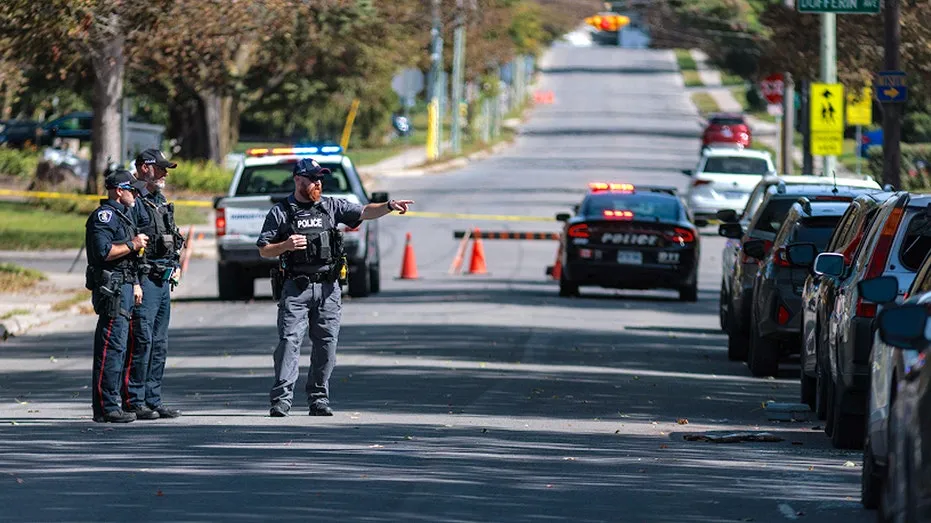
The synagogue in Belleville, Ontario, was not protected by design. It was protected by accident. A report of a suspicious vehicle prompted police to dispatch an officer to the area outside the Sons of Jacob Synagogue during Yom Kippur, the holiest night of the Jewish calendar. That officer, Constable Jeff Smith, happened to be sitting in his cruiser when 29-year-old Sean Ward allegedly approached, shouted “You are going to die for the Jews,” and opened fire with a shotgun. Smith was struck multiple times in the head and body while still inside his vehicle. He emerged anyway and returned fire. A second officer arrived within minutes. Ward later died in hospital. Roughly two dozen worshipers inside were unharmed. Investigators then disclosed what should alarm every policymaker in Ottawa: the suspect possessed, in the words of Belleville Police Chief Murray Rodd, the “means, motive and mechanisms to cause a mass casualty and the destruction of the Jewish synagogue,” along with combustible materials in his vehicle. The barrier between that plan and its execution was not a security framework. It was one wounded man and a fortunate phone call.
The structural facts are stark. Simon Wolle, CEO of B’nai Brith Canada, put it plainly: “The only thing that stood in the way of every congregant of that shul being murdered was the presence of an armed police officer.” Yet no Canadian legislation currently permits Jewish institutions to hire qualified armed private security, even when facing credible threats. Firearms regulation sits at the federal level; private security licensing sits with the provinces; the two frameworks have never been aligned for this purpose. Communities are left with three options, all inadequate. They can request increased police patrols, which departments will not guarantee. They can hire paid-duty officers, where availability is scarce. Or they can spend their own money on walls, fences and cameras. Meanwhile the threat data points one direction. Statistics Canada recorded 788 police-reported hate crimes targeting Jewish people in 2025, more than 70% of all religiously motivated hate crimes that year, against a community constituting roughly 1% to 2% of the population. Preliminary figures from B’nai Brith’s 2026 audit indicate violent antisemitic incidents have already more than tripled compared with all of 2025. Prime Minister Mark Carney condemned the Belleville attack and declared that Jewish people must be able to worship safely. Wolle’s response cuts through the ceremony: “The government gives us words and no action.” B’nai Brith had already submitted concrete action plans to multiple levels of government before the shooting. The requests are now two: amend laws to permit trained, vetted, licensed armed guards at vulnerable institutions, and fund increased police presence at those locations.
Here is the strategic reality Ottawa must confront. A state that acknowledges a national crisis of targeted violence, yet leaves the targeted minority funding its own perimeter defenses, has effectively outsourced a core sovereign obligation. Wolle frames it correctly: “The government needs to meet its most basic obligation and responsibility, which is to protect its citizens.” The cost calculation is not complicated. Legislation enabling regulated armed security, plus funded police deployment, is trivially cheap next to the political price of a successful massacre on Canadian soil. Belleville was the warning shot, delivered with a shotgun and survived by luck. The next suspicious vehicle report may not come in time. Governments that treat emergency protection as a subject for future consultation will discover that adversaries do not schedule their attacks around legislative calendars. Canada can either build the legal mechanism for armed protection now, or read about the consequences later.
Author bio: Marcus Sinclair, a Senior Fellow at a prominent European geopolitical and security think tank, specializing in domestic security policy, state capacity, and the protection of vulnerable communities.