(SeaPRwire) –
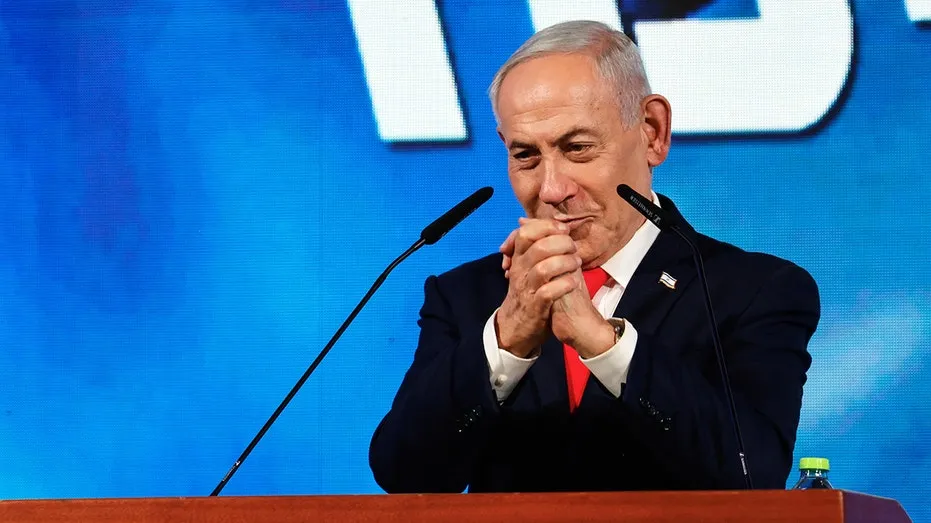
The numbers tell a story of a prime minister who has mastered the art of political survival but has run out of political math. Benjamin Netanyahu’s right-wing bloc stands at 54 seats, the opposition at 47, and the Arab parties at 19. That is a 120-seat Knesset where no one controls the floor. What should have been a referendum on his government’s catastrophic failure on Oct. 7, 2023, has instead produced a fragmented electorate that has rewarded the very man Israelis blame for the deadliest day in their nation’s history. This is not a victory lap. It is a stalemate engineered by a political system that punishes everyone and rewards no one.
With 70% of votes counted, Netanyahu’s Likud leads with 27 seats. Former military chief Gadi Eisenkot’s Yashar party holds 20. The Joint List controls 13 seats, and Ra’am, under Mansour Abbas, holds six. Netanyahu’s coalition partners outside his bloc collectively command 66 seats—a mathematical majority that should make him a lame duck. Yet here we are. The opposition cannot form a government because it refuses to embrace the very parties that could hand it power. The country faces another potential election, another year of paralysis, and another stretch of Netanyahu as caretaker.
Trump’s post-election Truth Social post claiming his endorsement “turned the tide” is political theater. The exit polls Tuesday night showed Eisenkot ahead, which triggered premature celebrations at his Tel Aviv headquarters. The actual count shifted overnight, revealing a different reality. Netanyahu declared from Jerusalem that Likud emerged as the largest party. Eisenkot demanded Netanyahu accept the results and step aside. Neither statement aligns with the arithmetic required to govern. The gap between perception and reality is the story here, and it is one of coalition-building, not ballots.
The growing influence of Arab parties has become the central obstacle to any stable government. Abbas has signaled openness to negotiations, telling Channel 12 that “everyone is talking to us, not just the change bloc.” Democrats leader Yair Golan openly advocates for cooperation, writing that “65 is greater than 55. That’s how Israeli democracy works.” But Eisenkot has ruled out including Ra’am in his coalition. Netanyahu warns against any government dependent on Arab parties. This is a contradiction no one in the opposition seems willing to resolve. The Arab parties hold the keys to 61 seats, and neither bloc is willing to unlock the door.
The path to a government runs through President Isaac Herzog, who will consult with parliamentary factions after official results are released Nov. 4. The candidate chosen gets 28 days to negotiate, with a possible 14-day extension. Netanyahu could try to peel off seven lawmakers from outside his bloc. Eisenkot could seek enough recommendations to get the first shot at forming a government. But the third option looms largest—another deadlock. This is the real game here, and it involves the same actors fighting over the same seats with the same ideological barriers that have haunted Israeli politics for years.
A Netanyahu-led government that depends on Arab parties is a nonstarter for his base. An Eisenkot-led government that excludes Arab parties is a mathematical impossibility. One side will have to blink, or Israel will go back to the polls.