(SeaPRwire) – By: Julian Holbrooke
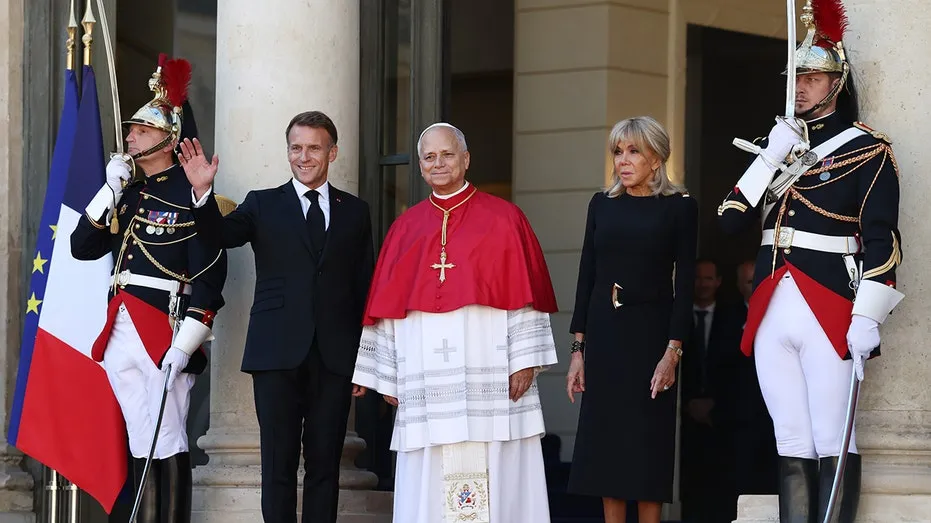
The photograph of Pope Leo greeting President Macron at the Élysée Palace was designed for cable news. It said exactly what both men wanted it to say. Yet what actually matters here is not the pageantry. What matters is something far more unsettling for French secularists. France, the nation that defined laïcité and expelled religion from the public square, is witnessing a quiet but statistically undeniable religious revival. More than 21,000 adults joined the Catholic Church this year alone. The driving demographic is not the elderly. It is 18 to 25-year-olds.
The official line from the Vatican frames this papal visit as a pilgrimage of healing. They call it a journey uniting faith and public engagement, memory and the future. That language is carefully calibrated. The reality is sharper. This is a institution leveraging a generational religious surge to re-anchor itself in the heart of secular Europe at a moment when its moral authority is most contested. The numbers speak plainly. France has constitutionalized abortion. France has passed legislation allowing adults with incurable illnesses to receive lethal medication. The country marked the 50th anniversary of Vatican II with state-sanctioned secularism hardened into constitutional law. And yet, the youngest French adults are walking toward the altar in record numbers. The Church is not merely surviving in France. It is exploiting the existential vacuum left by secular modernity.
The structural story extends beyond demographics. The Vatican chose Lourdes as a centerpiece stop precisely because it is the one French site where the Church’s healing narrative carries undeniable weight. The decision to hold private meetings with seven abuse survivors there was not spontaneous. It was calculated damage containment. A retired French bishop described the visit as sparking a tidal wave of interest. That framing reveals the actual strategy. The Church is pivoting from institutional defense to institutional renewal, using symbolic vulnerability as its vehicle. The Vatican knows that credibility recovered through public spectacle outperforms credibility lost through institutional silence.
Meanwhile, the geopolitical theater plays out on schedule. Pope Leo is set to address UNESCO on AI governance, repeating his May manifesto warning against unregulated artificial intelligence. This puts him directly in opposition to President Trump’s pro-innovation stance. France is simultaneously the host nation and the ideological battleground. Macron invited all 27 EU leaders. Ukrainian President Volodymyr Zelenskyy may attend. The Pope will speak at Notre-Dame, restored after the 2019 fire. He will conclude in Metz, the birthplace of Robert Schuman, championing European friendship. Every stop is choreographed to project the Catholic Church as the moral guardian of European civilization at a moment when European elites are fracturing over immigration, AI regulation, and demographic decline.
The question is whether France’s young Catholic converts will sustain this momentum beyond the Papal visit. Or whether the Church’s renewed visibility will simply accelerate the same secular backlash that produced France’s 2021 and 2024 legislation. The answer determines whether Pope Leo’s fifth Apostolic Journey becomes a turning point or a beautifully staged epilogue.
Author bio: Julian Holbrooke is an overseas international relations analyst who frequently contributes to major European daily newspapers.