(SeaPRwire) –
Albania is bleeding democracy. A NATO ally sits in turmoil. And somewhere in the halls of Capitol Hill, two Republican lawmakers are sharpening their knives. This is not an act of charity. It is a power play dressed in virtue. The timing is too precise to ignore.
In a letter to Secretary of State Marco Rubio, Representatives Joe Wilson and Keith Self are pressing for visa restrictions against Albanian officials accused of corruption. They cite Section 7031(c) of the annual State Department appropriations bill. That is real authority. That is a legal mechanism that can freeze assets and bar entry into the United States. The deadline for answers? November 5. The message is clear: Washington will no longer watch from the sidelines while corruption festers in a strategic partner.
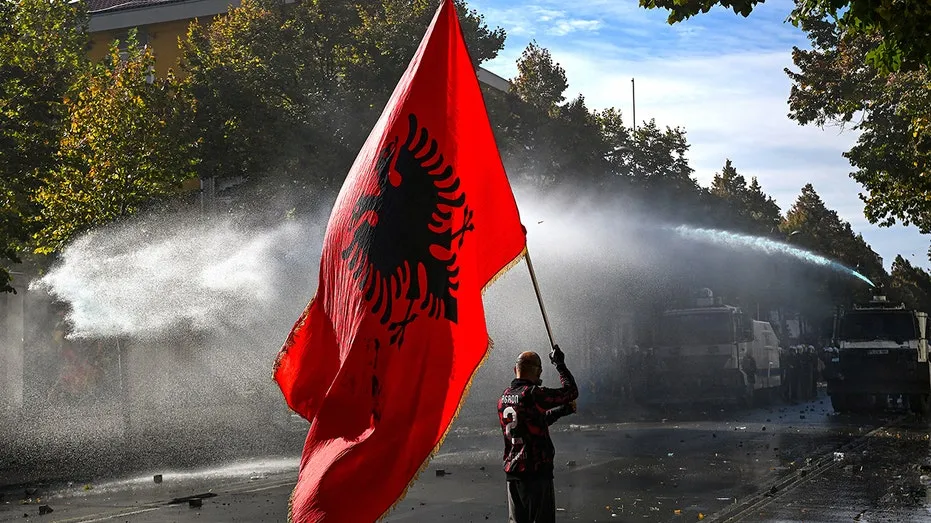
But reading this as purely altruistic would be naive. The letter arrives as tens of thousands of Albanians flood the streets of Tirana. They have been demonstrating for over 150 days. Students lead the charge. Their demands are simple: accountability, an end to corruption, and the restoration of democratic institutions. Two weeks ago, protests turned violent. Demonstrators lobbed Molotov cocktails at the Education Ministry. Others attacked the Socialist Party headquarters. Riot police stood guard. The scene evoked memories of similar upheavals across Europe. This is not a controlled opposition crisis. This is a societal explosion.
Prime Minister Edi Rama refuses to step down. He blames “foreign hands” and accuses the masked protesters of representing organized crime more than students. His government has not lifted the immunity of former Deputy Prime Minister Belinda Balluku, who faces charges for allegedly interfering in public procurement for road construction. Prosecutors requested the immunity lift in December 2025. Parliament rejected it. Rama called the request unconstitutional. The anti-corruption institutions are being systematically neutralized by the very people they are meant to investigate. This is how regimes survive.
The geopolitical dimension cannot be understated. Albania has been an official EU accession candidate since 2014. The 2025 European Commission report acknowledged significant strides in judicial reform and the fight against organized crime. But those strides are unraveling. The current violence will complicate EU membership prospects. Washington is watching closely. A democratic backsliding in the Western Balkans creates a vacuum. Vacuums invite competitors. Russia. China. Others who see an opportunity to exploit institutional weakness.
The parallels with Serbia are striking. Student-led protests there toppled Aleksandar Vučić after nearly two years of demonstrations. Agim Nesho, former Albanian ambassador to the UN and the US, has drawn that comparison explicitly. He noted that Albania’s unrest mirrors Serbia’s trajectory. The pattern is recognizable: prolonged citizen mobilization against entrenched corruption, targeting a leader who has governed for over a decade. The outcome in Belgrade should give Tirana’s establishment pause. History does not repeat itself. But it rhymes.
The congressional pressure campaign reveals something deeper about US foreign policy at this moment. The bipartisan consensus on supporting NATO allies is fraying. Republicans are now using democratic governance as a lever. Section 7031(c) exists precisely for this purpose. It was designed to punish corruption and human rights abuses abroad. Its invocation against a NATO member signals a shift in American posture. Washington is no longer willing to tolerate strategic partnerships built on compromised institutions.
But the question remains: what happens next? The visa restriction mechanism is a blunt instrument. It can target individuals. It cannot rebuild institutions. Democracy cannot be imposed from the outside through diplomatic pressure alone. The Albanian people are demanding change from within. External actors can support that demand. They can also undermine it by making the government appear besieged by foreign interference. Rama’s rhetoric about foreign hands exploiting the protests is a warning shot. It frames external criticism as an attack on national sovereignty.
The November 5 deadline will determine whether the Rubio administration acts decisively or issues a cautious statement. Congress is watching. The Albanian public is watching. The EU is watching. Every decision made in Washington and Tirana over the next two weeks will shape the trajectory of a country at a crossroads. The stakes extend beyond Albania. They touch the broader question of whether democratic alliances can survive from within when corruption eats away at their foundations.