(SeaPRwire) – By: Marcus Sinclair
The Middle East’s newest air corridor was never going to be just another commercial route. Two countries that spent seventy-five years refusing each other entry signed a normalization deal in 2020, and within months Emirates opened its sister carrier Flydubai to Tel Aviv. The route became a lifeline for Israeli travelers seeking affordable connections to Europe and beyond. The UAE positioned itself as the essential transit hub between East and West. But beneath the glossy press photos and trade statistics, the airspace between Dubai and Tel Aviv has always been haunted by a simple truth. Decades of conflict do not dissolve because two foreign ministers signed a piece of paper. When a commercial Boeing 737 transmits a squawk code at thirty-five thousand feet, the instinct on both sides of that route is not efficiency. It is survival mode.
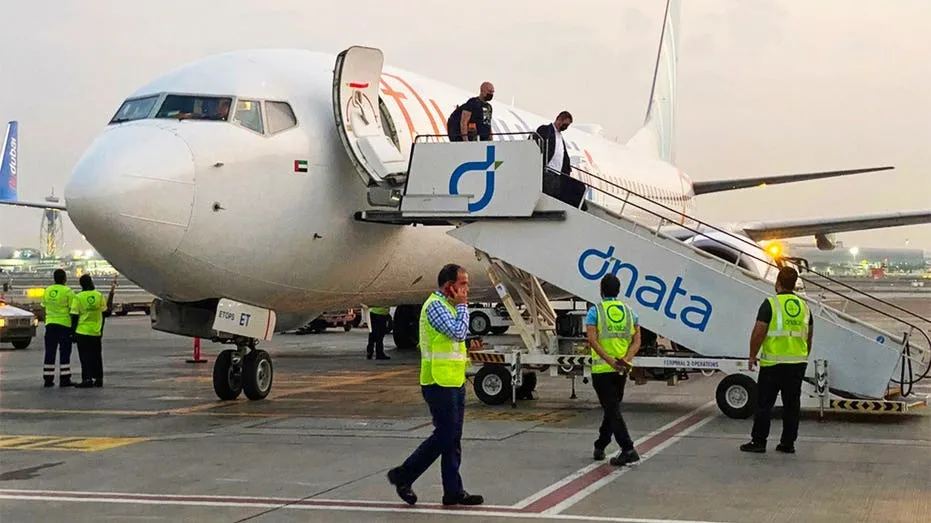
On Wednesday, that instinct was triggered in its most raw form. Flydubai Flight FZ1073 departed Dubai bound for Ben Gurion Airport near Tel Aviv. Somewhere over Saudi airspace, an altercation broke out inside the cockpit between the two pilots. The nature of the dispute remains unconfirmed. Regional officials briefed on the matter say it was a confrontation between the pilots, though no motive has been released. What happened next is where the geopolitical weight of this incident becomes impossible to ignore. The aircraft transmitted a distress alert. Israeli authorities, citing security sources, scrambled fighter jets. A second official confirmed the interception protocol was activated. Passengers aboard described shouting from the front of the cabin, a steep dive during descent, and a landing in Tabuk, Saudi Arabia. Everyone survived. The plane was surrounded by Saudi security forces while passengers remained seated. The Israeli Prime Minister’s office stated the situation was under control and that repatriation efforts were underway. Netanyahu had warned in recent days about unspecified heightened security threats facing Israel. This incident arrived inside that warning cycle like a detonation. The historical context carries its own gravity. Israel has not experienced an aircraft hijacking in decades. The memory of Palestinian militant operations in the 1960s and 1970s shaped an entire national security architecture around aviation threat response. That architecture does not switch off because of a diplomatic agreement. It defaults to the worst-case scenario, every single time.
The commercial and strategic fallout from this event will be measured in ways that go far beyond a single diverted flight. Flydubai operates as Emirates’ lower-cost sibling, a model built on thin margins and high asset utilization. Any disruption to the Tel Aviv corridor strikes directly at that business case. More critically, the incident reveals the structural fragility of UAE-Israel aviation ties. These routes exist inside a security environment where one cockpit dispute can trigger a military interceptor response and force an emergency landing on sovereign territory belonging to a third party. That is not a minor operational hiccup. It is a stress test of the entire normalization framework. The route opened because two governments decided the strategic cost of connection outweighed the historical risk. Wednesday proved that the risk was never gone. It was only deferred. Airline passengers on this route are not just booking a seat. They are walking into an environment where a medical emergency, a pilot argument, or a false distress signal can escalate into a geopolitical incident within minutes. The Israeli defense establishment will review this incident with the same procedural rigor it applies to every other threat assessment. Saudi authorities have every incentive to ensure Tabuk’s response protocol appears smooth. Flydubai’s parent company, Emirates Group, will quietly assess whether this route requires enhanced cockpit security protocols or whether the commercial calculus still holds. The ultimate end game here is not about whether Dubai and Tel Aviv resume normal flights. They will. The question is whether the normalization project can survive repeated incidents that remind every stakeholder that the region’s airspaces are still operated as if peace is conditional. It is. And this flight proved it in under two hours.
Author bio: Marcus Sinclair, a Senior Fellow at a prominent European geopolitical and security think tank, with fifteen years of experience analyzing Middle Eastern security dynamics and aviation policy.