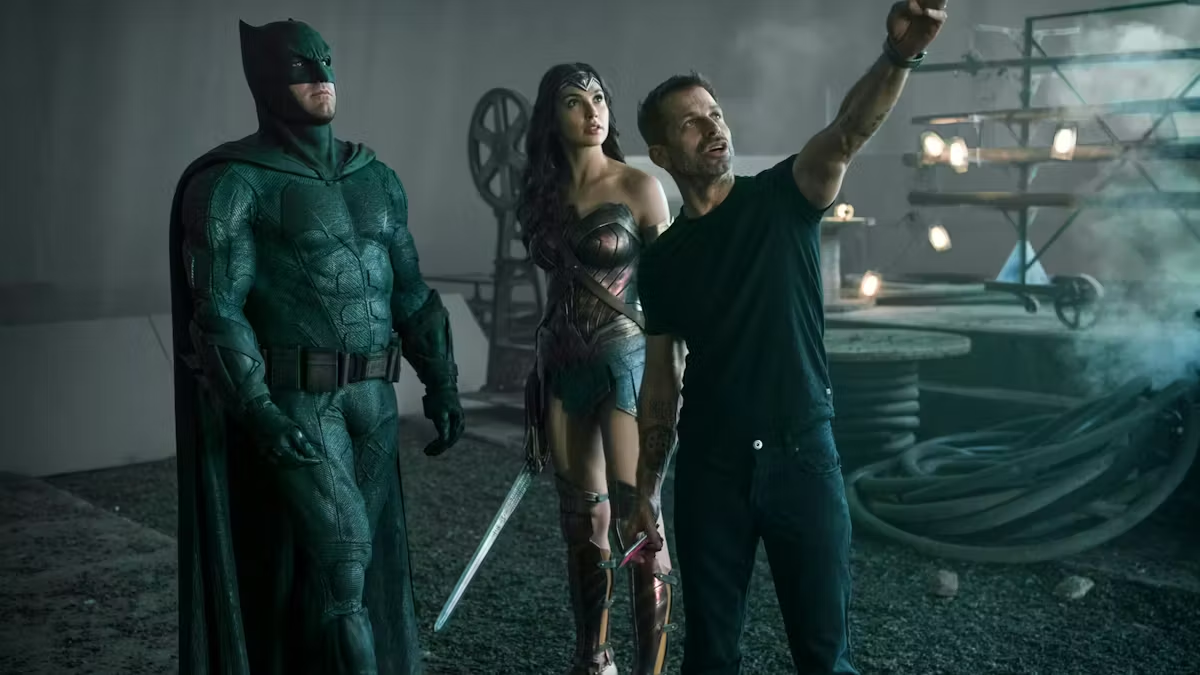
(SeaPRwire) – Gore Verbinski’s BioShock. Edgar Wright’s Ant-Man. Colin Trevorrow’s Star Wars: Episode 9. Ever since film studios recognized the massive revenue potential of blockbuster adaptations of popular intellectual property, a steadily growing graveyard of discarded directorial visions has emerged, cast aside in favor of content designed to appeal to the broadest possible mainstream audience. It is not a new phenomenon for filmmakers to walk away from projects or be removed from them, but the internet has given curious fans unprecedented access to behind-the-scenes details of these scrapped works — storyboards, screenplays, and even raw early footage offer a peek into an alternate reality where these creative projects were fully realized and released.
It is extremely rare for these abandoned projects to finally come to fruition long after production wraps, as catering to fan demands or the wishes of disaffected directors would force studios to defend their past decision-making. But five years ago, one filmmaker pushed back against the studio system and effectively turned back the clock (supported by an extremely loyal fanbase), releasing a film whose existence was so surrounded by unconfirmed reports and mystery that it had already become pop culture legend: Zack Snyder’s Justice League.
The off-screen drama tied to Justice League has become a near-mythic reflection of the challenges of big-budget film production: after wrapping principal photography in late 2016, Snyder made the decision to step away from the project following the death of his daughter Autumn, leading Warner Bros. to bring on Joss Whedon, the creative mind behind 2012’s hit The Avengers, to complete the film during post-production. Still reeling from the polarizing audience response to Batman v. Superman, the studio used this shakeup as an opportunity to move away from Snyder’s planned dark, sprawling epic in favor of a project that matched the playful, campy Saturday morning cartoon energy that defined many MCU entries.
This choice backfired spectacularly: the theatrical cut of the film was a massive box office flop that failed to recoup its production costs, and the poorly received finished product sparked a fan campaign that spent the next four years pushing for the release of Snyder’s original cut assembled from all the footage he had captured. When the long-rumored Snyder Cut finally debuted in 2021, it served as a perfect case study of how two different filmmakers can take the exact same source material, even the same raw footage, and produce wildly different end results.
While Whedon’s Justice League was a jarring tonal shift from prior DC films, defined by its overly bright saturated color scheme, awkward failed jokes, and disjointed, mismatched reshot scenes, Snyder’s cut was a four-hour epic carrying the world-altering stakes of DC’s iconic Crisis storylines. It is not quite as dark and gritty as his earlier DC works, but it is unmistakeably his unique creation. Traces of studio pressure to address complaints about his previous film remain visible: Snyder’s version does include more tonally appropriate humor, and Batman’s new faith in the goodness of humanity feels slightly out of step with his characterization in earlier entries, but the film’s clear directorial vision is impossible to ignore.
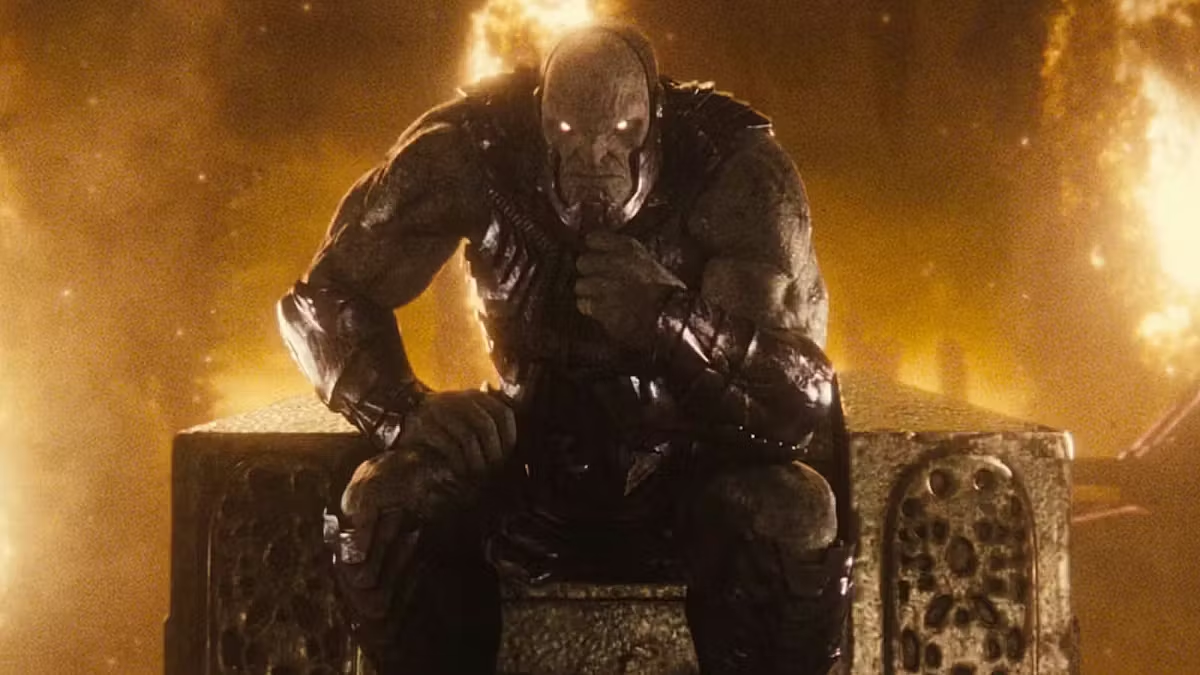
As is typical of Snyder’s DC films, ZSJL is not without its flaws. Not every scene in its four-hour runtime feels justified, Henry Cavill’s Superman still comes off as little more than a polished plot mechanism rather than a fully realized character, and villain Steppenwolf lacks the distinct personality and engagement factor of Michael Shannon’s General Zod or even Jesse Eisenberg’s take on Lex Luthor. Even so, the film gets a lot right, enough that many consider it the strongest entry in Snyder’s DC trilogy.
Snyder’s well-documented talent for striking visual set pieces is at its finest in this cut, pairing stunning shot framing with his trademark speed-ramping effect to make the action look like panels lifted straight from a comic book, with the heroes seemingly leaping off the page. The film also strikes a strong balance between lighthearted team camaraderie and respectful, mythic treatment of its central superhero group. The early moments of the characters building bonds with each other feel genuine, yet the film never loses sight of the immense power and iconic status of these larger-than-life figures; one minute, Batman and Wonder Woman are teasing each other like work colleagues, and the next they are battling Parademons with the gravitas of legendary folk heroes. It is a rewarding tightrope walk for the film, and it leaves viewers with a bittersweet sense of what could have been, offering a peek at a timeline where Snyder’s planned DC franchise grew stronger and more polished with each new release.
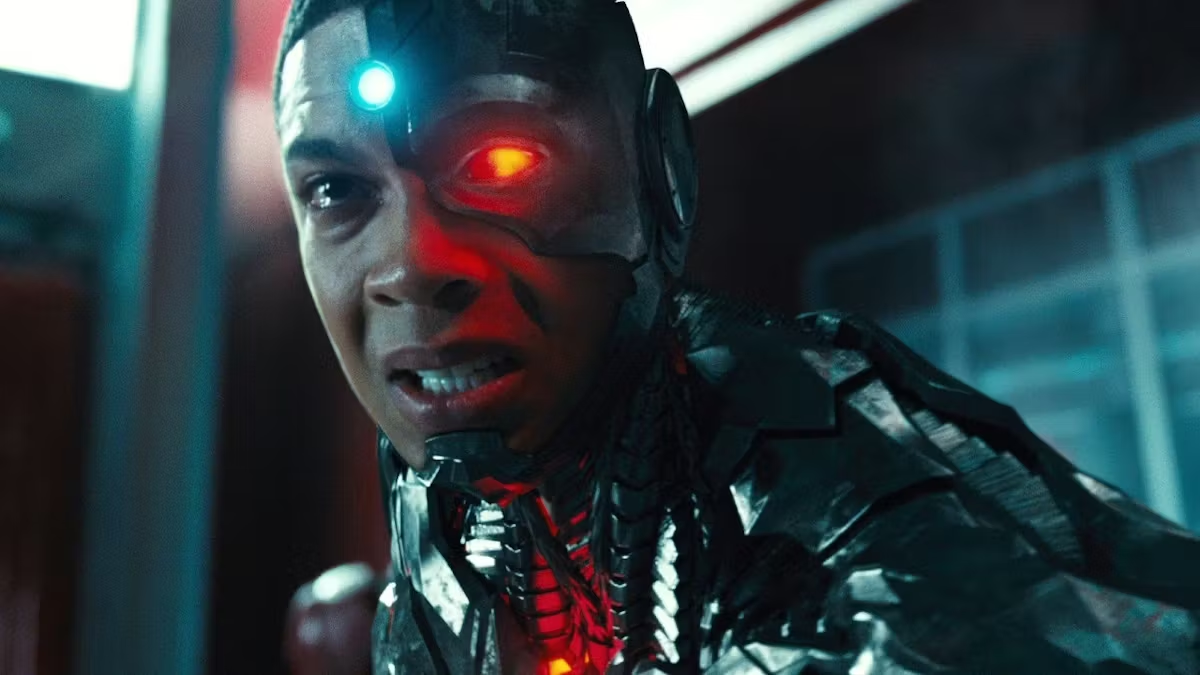
Given its rocky road to release, it is striking how much Zack Snyder’s Justice League feels like a meta commentary on its own creation and its director, particularly through the arcs of its two core characters: Cyborg and The Flash. Ray Fisher’s portrayal of Cyborg serves as the emotional core of the film, making his sidelined treatment in the theatrical cut all the more disappointing. His story centers on learning to adapt and find a way forward in life after experiencing devastating loss, and it is easy to see how personal that narrative thread would have been for Snyder as he edited the film in the wake of his own family tragedy. The beauty and emotional heft of Cyborg’s declaration that he’s “not broken” and “not alone” hits even harder when you consider the huge fan community that came together to support Snyder’s vision following his unthinkable loss.
The Flash, by contrast, feels like a stand-in for the enormous, unprecedented effort that went into getting the Snyder Cut released to the public. His story is built around a false premise — that his father killed his mother — and throughout the film, he battles against time itself to rewrite his family’s story and prove himself to the world. This plot line mirrors the real-life journey of the film itself: four years of campaigning to pull off the impossible and reverse the course of the 2017 release, pushing back against the negative reception of the theatrical cut that was credited to Snyder, and fighting the studio’s long-held claim that his original version of the film was “unreleasable.”
“Make your own future. Make your own past.” The line Barry Allen delivers as he races to alter fate in the film’s climax also speaks to the lasting impact the Snyder Cut has had on Hollywood and the broader film industry. It delighted millions of fans, but it also triggered a shift in the dynamic between creators and audiences, the ripple effects of which are still being felt today. Zack Snyder’s Justice League, for all its imperfections and soaring, dramatic high points, offers a look at a version of Hollywood where big-budget studio blockbusters are, for better or worse, exactly what they are meant to be: unfiltered, unique creative visions from a filmmaker sharing a story that only they could make.
Zack Snyder’s Justice League is available to stream now on HBO Max.
This article is provided by a third-party content provider. SeaPRwire (https://www.seaprwire.com/) makes no warranties or representations regarding its content.
Category: Top News, Daily News
SeaPRwire provides global press release distribution services for companies and organizations, covering more than 6,500 media outlets, 86,000 editors and journalists, and over 3.5 million end-user desktop and mobile apps. SeaPRwire supports multilingual press release distribution in English, Japanese, German, Korean, French, Russian, Indonesian, Malay, Vietnamese, Chinese, and more.