

(SeaPRwire) – By: Oliver Hawthorne
James Gunn’s DCU has taken a massive swing at rebooting legacy properties, but the handling of Hal Jordan’s romance in HBO Max’s *Lanterns* exposes a fundamental anxiety in modern franchise adaptation. The core contradiction is simple. We are stripping away the most iconic, complex duality of a character to avoid narrative complexity. Hal Jordan without Carol Ferris is not a hero with a soft spot. He is a soldier with a secret. By reducing their history to a brief funeral cameo, the showrunners have signaled that they view legacy not as a foundation to build upon, but as a liability to be managed. This is not a storytelling choice. It is a risk mitigation strategy dressed up as creative liberty.
The facts on the ground are stark. Carol Ferris debuted in *Showcase #22* alongside Hal. For her first three years, she was the standard executive-vice-president-of-Ferris-Air archetype. Then came 1962. That is when the Star Sapphire persona was introduced in *Green Lantern vol. 2 #16*. She was not just a love interest. She was a vector for external corruption. The Zamarons brainwashed her via a gem. She fought this identity for decades. Later, a split personality named Predator emerged. That entity was eventually revealed as the avatar of love. When Hal Jordan, operating as The Specter to atone for his Sinestro-era sins, purged the Sapphire persona, it set the stage for Geoff Johns’ 2004 run. That era reintroduced the Star Sapphire Corps. This version acted as circumstantial allies during the *Blackest Night* crossover, even briefly aligning Wonder Woman. The show ignores all of this. It ignores the 2008 event where the Star Sapphires fought the Black Lanterns. It ignores the depth. It ignores the fact that Carol’s power is intrinsic to Hal’s origin myth.
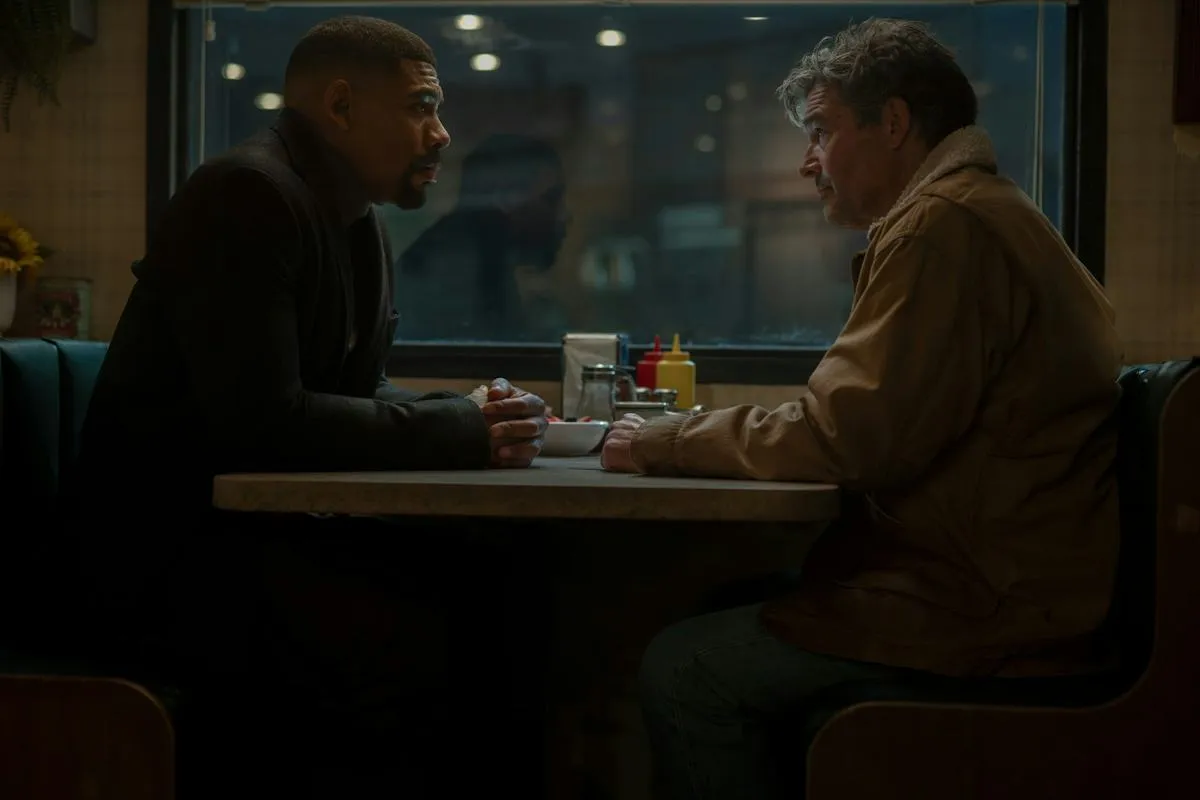
Commercially, this decision maps to a rigid end-game for the DCU. They are not building a universe. They are building a brand. The presence of Kyle Chandler as Hal anchors the show in a familiar, grounded reality. Introducing the Star Sapphire adds alien mythology, moral ambiguity, and complex power dynamics. That is too messy for a linear narrative arc focused on Hal’s funeral and resurrection. By keeping Carol in the background, playing only a cameo by Amie MacKenzie, they protect the clean binary of hero versus villain. They protect the marketability of a simple redemption arc. The commercial loop here is clear. Simplicity sells tickets. Complexity sells to the die-hard comic readers who are already alienated by the changes. The show is not for them. It is for the masses who want a superhero show that looks like a prestige drama. The inclusion of original characters and the removal of deep lore is a calculated move to lower the entry barrier. It is a bet that accessibility outweighs fidelity. The end game is a watered-down universe where continuity is a suggestion, not a law. The real profit lies in the merchandise, the streaming metrics, and the next movie tie-in. Carol Ferris is not a character here. She is a variable that was deemed too volatile to include.
Author bio: Oliver Hawthorne, a Principal Correspondent permanently stationed at an international technology review.