
(SeaPRwire) – By: Robert Kensington
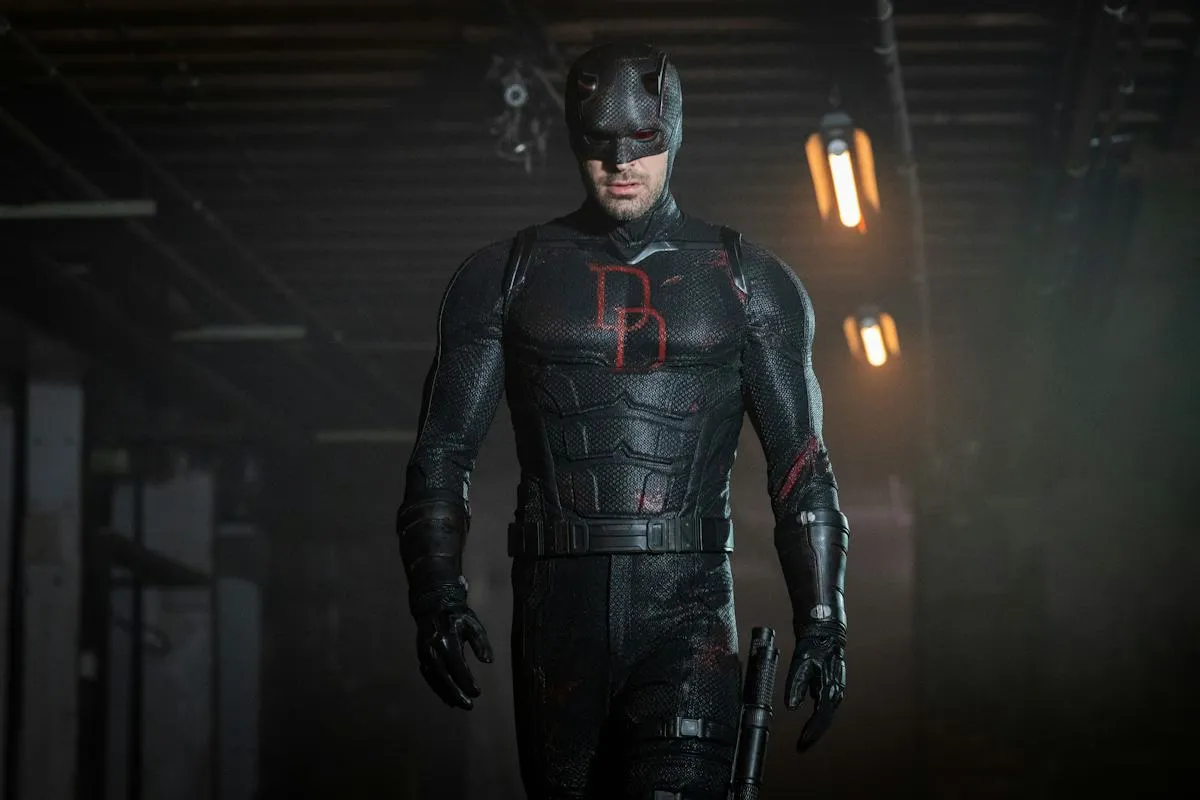
Every streaming executive eventually reveals their true strategy by cutting a show, and Marvel just did it with Daredevil: Born Again. Three seasons. Final answer. According to Marvel’s Head of TV Brad Winderbaum, this was always the plan. He told The Brandon Davis Show the symmetry with the original Netflix run — three seasons there, three seasons here, two clean sets on your collector’s shelf — was the guiding principle from the start. That framing sounds like elegant storytelling architecture. It isn’t. It’s corporate risk management dressed up as narrative symmetry. I’ve spent two decades tracking how industrial capital deploys across real-economy sectors, and this playbook is identical to what I see in manufacturing pivot decisions. When a company locks in a shorter timeline than it originally signaled to its stakeholders, it almost never happened because the creative vision crystallized overnight in an executive meeting room. It happens because unit economics shifted mid-stream. Competitive pressure intensified in adjacent market segments. Leadership decided the marginal return on additional production volume no longer justified the capital deployment at current revenue per user. Winderbaum’s trade paperback metaphor — framing these as two three-volume sets you slot into your shelf — is not a storytelling insight. It’s a completion narrative designed to make audiences feel satisfied with a shorter run. Every major streaming platform now treats series endings as asset management decisions. A show tagged “complete” drives rewatch campaigns, merchandise cycles, and long-term catalog longevity. An open-ended show that gets axed mid-arc generates subscriber churn and social media backlash. Marvel chose the completion path. The three-season cap is the business case that got built first. The creative justification came later to explain the business decision.
The official record is clean on the surface but fractures under scrutiny. Winderbaum laid out the three-season plan as pre-determined and final. The story wraps with Matt Murdock getting a proper sendoff. The Defenders assemble for a season finale. Krysten Ritter’s Jessica Jones completes her MCU arc. Everything ties off in a commercially satisfying package Disney+ can market as a definitive chapter. The symmetry with the Netflix-era Daredevil is the centerpiece of his argument — three seasons on Netflix before cancellation in 2018, three seasons on Disney+ before a planned ending, two parallel three-volume sets that slot into the same collector’s shelf. But flip through the actual public statements from the last eighteen months and the picture shifts. In 2025, Winderbaum told ScreenRant this story could go on to “season infinity.” As recently as February of this year, he told Entertainment Weekly that Marvel had not yet decided how many seasons Born Again would run. Those are not the words of someone executing a fixed three-season plan. Those are the words of a content strategist keeping acquisition competition and creator leverage options open while internal ROI models got finalized behind closed doors. The “always three” line didn’t originate in 2023 greenlight meetings. It was written after the decision to cap the run landed and communications teams needed a coherent public narrative to wrap around it. Corporate messaging always works backward from the business conclusion. The polish gets applied after the deal is sealed. What Winderbaum is selling on The Brandon Davis Show is not the original roadmap. It’s the post-decision story that makes the ending look deliberate rather than reactive.
The real commercial calculus underneath the three-season cap is not subtle. Born Again only just clawed back the propulsive, character-driven tone of the original Netflix Daredevil. The show only recently pulled the remaining Defenders ensemble into the MCU proper, expanding the cast and the production footprint significantly. Season 3 will bring Jessica Jones, Luke Cage, Foggy Nelson, and Murdock into a farewell crossover that Marvel is betting generates enough cultural momentum to make viewers feel the ending was narratively earned even if it feels compressed. That is a classic streaming monetization play. You pack as much recognizable franchise value as possible into the final season so the completion campaign has maximum promotional surface area across marketing channels. The Punisher One Last Kill model is the obvious template here. Winderbaum confirmed Charlie Cox will not stop being Daredevil after Season 3. Marvel will “take a breath and figure out what’s next for the character.” That translates to a feature-length special, a limited run with a different subtitle, or eventually a theatrical pivot if box office economics support it. The character IP is now decoupled from the Born Again production infrastructure. That is a smarter asset structure for Disney’s balance sheet. It preserves optionality on a proven character while eliminating the fixed cost burden of maintaining an ongoing series production team indefinitely. The Defenders reunion in Season 3 carries real creative risk. Too many converging character arcs risk diluting individual storylines. Too few feels underwhelming. The writing team has to thread that needle with whatever production budget remains after two seasons of amortized overhead. Marvel is taking that bet because the alternative — dragging the show past its commercial peak into diminishing returns territory — was riskier for both subscriber retention metrics and production ROI.
Streaming executives always claim they had a complete creative vision from day one. They never do. They hedge publicly, commit privately, and rewrite the origin story after the contract ink dries. Three seasons for Born Again is not symmetry. It is the minimum viable product Marvel decided it could defend at the current subscriber price point, with the current competitive slate from rival platforms, and with the current subscriber acquisition costs that every streamer is now forced to underwrite. The math is brutal across the industry. Subscriber growth has stalled at every major platform. Content spending continues to escalate because the slate needs to feel dense enough to retain users who are already paying premium tier rates. A show like Born Again that generates solid engagement for two seasons but doesn’t hit breakout cultural inflection points is a candidate for controlled wind-down rather than indefinite continuation. The next Daredevil project — if it comes — will be greenlit with a different production model, a different subtitle, and a different commercial mandate. The character survives. The show format doesn’t. That is the actual industry shift hiding inside Winderbaum’s trade paperback metaphor.
Author bio: Robert Kensington, an overseas entrepreneurial veteran with decades of experience in real-economy industrial investment and expansion.