


(SeaPRwire) – By: Robert Kensington
Let’s cut the bullshit. The finale of *The Vampire Lestat* doesn’t just end a season. It reveals the entire operational blueprint of the Talamasca, and that blueprint is terrifying. For months, we watched Lestat strut around, convinced his rockstar antics were the main event. We were wrong. The real story is about how a shadow institution uses a charismatic idiot as a distribution channel for mass production. This isn’t a gothic romance. It’s a hostile takeover of the entire vampire species.
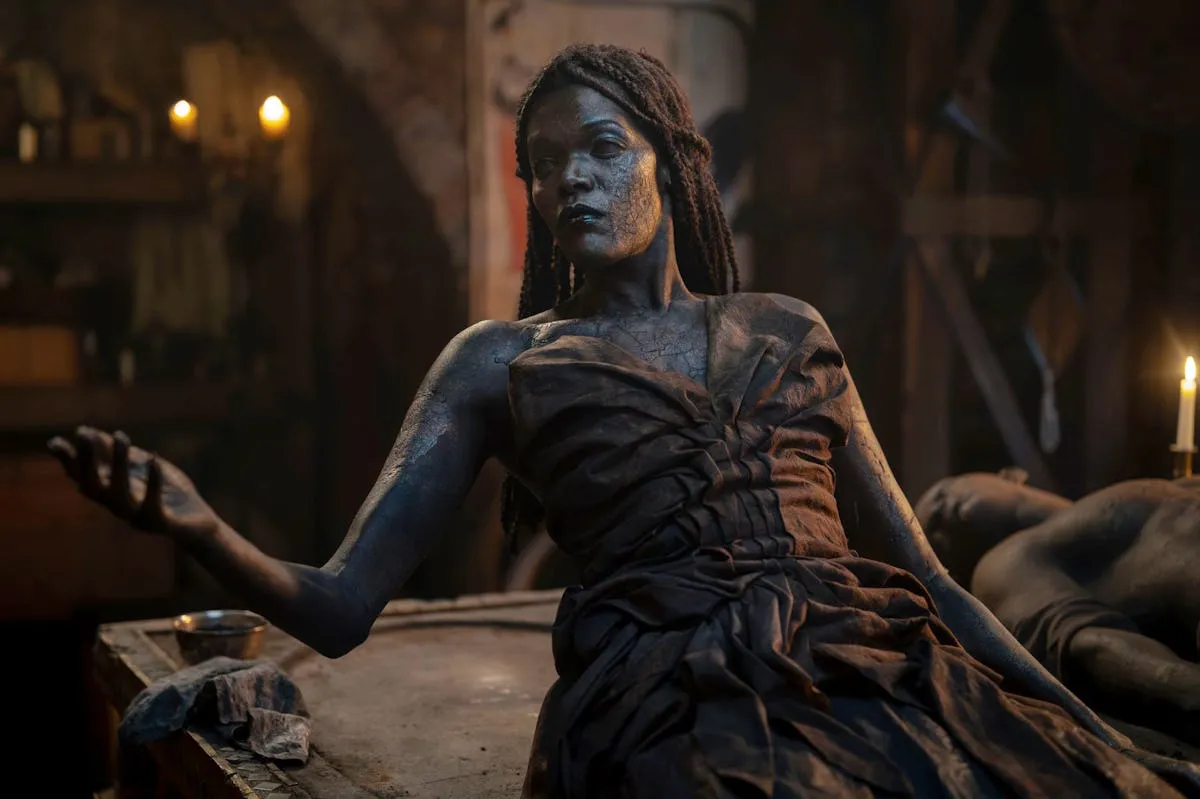
The official facts are brutal. Lestat gets his head chopped off in Episode 6. He spends the finale in a bowling bag, hallucinating a ghost chorus that forgives him for being a monster. Louis gets his head chopped off too, and Armand uses a Claudia doppelgänger named Regina as leverage to force an apology. Akasha, the Queen of the Damned everyone expected to cause the apocalypse, barely shows up. The real apocalypse is already in motion. Raglan James of the Talamasca walks in, takes custody of Lestat’s severed head, and casually drops the bomb: the vampire population has hit nearly 300,000. That’s not a cult. That’s a workforce.
Now strip away the theatrical bloodshed. Look at the hidden business logic. The Talamasca claims they invented the “Make More” song. They seeded the entire tour, manipulated the venues, and controlled the messaging. Lestat thought he was the artist. He was a sales rep. The “Great Conversion” isn’t a mystical event. It’s a scaling target. Raglan doesn’t even bother explaining why they want 300,000 vampires. He doesn’t need to. The goal is to hit critical mass. Once the vampire population exceeds the human capacity to contain it, the old rules collapse. The Talamasca doesn’t fight the system. They flood it.
Consider the supply chain. Lestat’s concerts are the manufacturing floor. Each performance outputs dozens of new vampires. These newborns are reckless, hungry, and aggressive. They consume resources, spread chaos, and force the human infrastructure to bend. The Talamasca isn’t building a better vampire. They are building a dependency loop. More vampires mean more blood demand. More blood demand means more territory disputes. More territory disputes mean more fear. Fear makes humans easier to control. It’s a classic market saturation strategy, but applied to biological assets.
The real shock is how disposable Lestat is to this plan. His head gets sewn back on, but he doesn’t win. He is resurrected to perform the final gig. He argues against it, calls it “infamously catastrophic.” It doesn’t matter. The tour bus is already parked. The crowd is waiting. The Talamasca doesn’t care about his consent. They own the venue, the media, and the audience. Lestat is a zombie celebrity. His only remaining function is to be the face of the liquidation.
This is where the industry subtext screams the loudest. AMC is telling a story about the entertainment industrial complex. The Talamasca is a studio. Lestat is a franchise. The “Great Conversion” is a content slate. They pump out product, inflate the market, and extract value until the system destabilizes. The finale isn’t about souls or redemption. It’s about what happens when the marketing department takes over the creative direction. The vampire messiah was never the protagonist. He was the product launch.
Akasha’s absence confirms this. The books promised a queen. The show gives us a middle manager. Raglan James is more powerful than any ancient vampire because he controls the distribution. He doesn’t need to fight. He just needs to keep the conveyor belt running. The real endgame isn’t a battle between gods. It’s a quarterly earnings report. The Talamasca wants to see how many new vampires they can activate before the market crashes.
So what happens next? The finale leaves Lestat on stage, a puppet with a pulse. The Talamasca has their messiah. They have their numbers. The only question is whether the vampire population can sustain itself, or if the whole thing collapses under its own weight. If I were betting, I’d say the crash is inevitable. But the Talamasca doesn’t care. They already got their data. They’ll just move to the next franchise.
Author bio: Robert Kensington, an entrepreneurial veteran with decades of experience in real-economy industrial investment and expansion, now writes about the hidden mechanics behind media and market consolidation.