
(SeaPRwire) – By: Christian Pierce
Stuart Fails to Save the Universe is not a spinoff. It is an insurance policy against franchise fatigue. Chuck Lorre and Bill Prady know something most studios have forgotten. Nostalgia has a shelf life. It expires faster if you just keep rehashing the same Sitcom formula. This project breaks that cycle. They are betting on Kevin Sussman’s Stuart to carry a sci-fi epic. The risk is enormous. The reward is infinite loyalty from a fanbase that feels left behind.
Young Sheldon proved we can monetize backstory. Georgie & Mandy’s First Marriage proves we can expand family trees. Stuart is different. He was the punchline. He was the sad sack. Giving him the spotlight changes the entire power dynamic. It is not about expanding the universe. It is about deepening the emotional investment. Fans did not love Stuart for his success. They loved him for his resilience. That is a much stronger hook for serialization.
The format is where the real insight lies. Ten episodes. Some as short as 15 minutes. This is not laziness. It is precision engineering. Modern television is bloated. Stories drag for thirty minutes because writers lack discipline. Here, the constraint forces creativity. Every joke must land. Every scene must advance the multiverse plot. This bloat-free model respects the viewer’s time. It creates a high-density experience. Viewers stay engaged because they are never bored. The brevity is a feature, not a bug. It clears the path for the absurdity to shine without feeling exhausting.
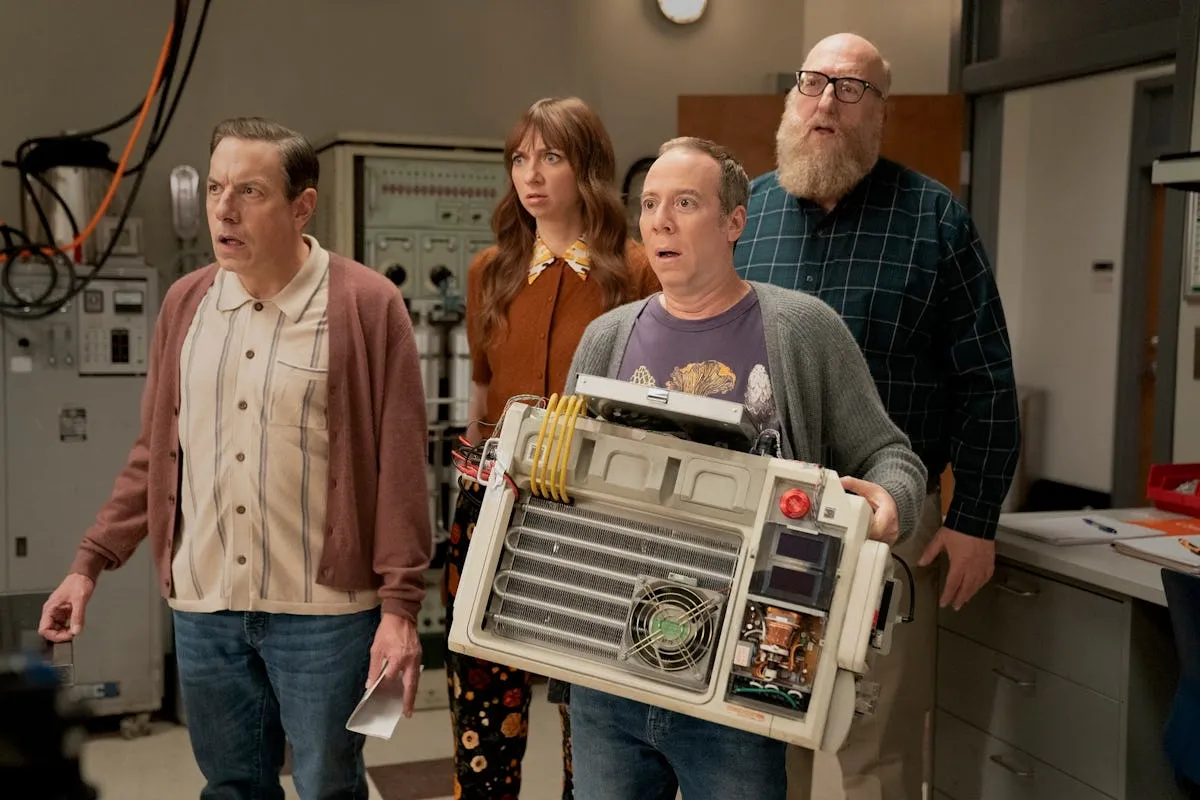
HBO Max has created something genuinely dangerous for competitors. It is not safe. It relies on outlandish genre-bending. Giant man-eating moths. Ancestors who are cows. These are not just gags. They are narrative devices to explore character dynamics in extreme conditions. The show embraces chaos. It admits none of it makes sense logically. That honesty builds trust. Audiences are tired of being lied to with fake depth. This show offers fun instead. The chemistry between Sussman and Lauren Lapkus is effortless. Brian Posehn and John Ross Bowie deliver reliable comic relief. The cast relishes the opportunity. You can see their joy on screen.
The first episode is a tough sit. It is sluggish. Characters feel undercooked. Jokes miss the mark. This is a common trap for prestige spinoffs. They try too hard to establish gravity. But sticking with it pays off. Episode two shifts gears. The multiverse-hopping adventure clarifies the stakes. Stuart is destined to save the world. He is the only one who can do it. This premise allows for endless variation. Each episode takes them to a different world. Primitive villages. Dystopian landscapes. The writers play with every trope available. They swing big. Almost all swings land.
This is a departure from the Comfortable Empire model. Lorre and Prady are not resting on their laurels. Co-creator Zack Penn brings fresh energy. The result is an inventive experience. Opening credits get sillier with each episode. Cameos are purposeful. They are never empty fan service. There is a constant stream of gags. Cheesy visual effects fit the quirky atmosphere perfectly. This aesthetic choice signals confidence. They do not need expensive CGI to sell the concept. They need heart. And they have plenty of it.
Television executives often fear tonal shifts. They worry audiences will reject drama mixed with absurdity. Stuart defies this fear. It is sometimes hyperviolent. Sometimes giddily absurd. Always totally itself. It marches to the beat of its own drum. This authenticity is rare. It cuts through the noise of crowded streaming markets. Viewers crave distinct voices. This show has a very loud voice. It warns us that IP expansion does not require stagnation. We can evolve characters without losing their essence.
The commercial loop here is fascinating. It targets the existing TBBT and Young Sheldon fandom. But it does not demand they accept retcons. Instead, it offers a pure extension. The short runtime lowers the barrier to entry. New viewers can jump in easily. Old viewers get closure on a side character. It bridges the gap between legacy content and new innovation. This strategy could redefine how studios approach spinoffs. Less bloat. More bite. Higher stakes. Lower risk of burnout.
We are witnessing a shift in serialized storytelling. It is moving away from epic sprawl toward intimate intensity. Stuart Fails to Save the Universe delivers both. It saves the universe on screen. It saves the franchise from irrelevance. If other studios watch closely, they will take notes. The future of IP might be short, sharp, and surprisingly weird. Do not bet on long running times. Bet on high impact moments. That is where the real value lies today.
Author bio: Christian Pierce, a chief financial columnist and markets commentator covering media consolidation and IP lifecycle valuation.