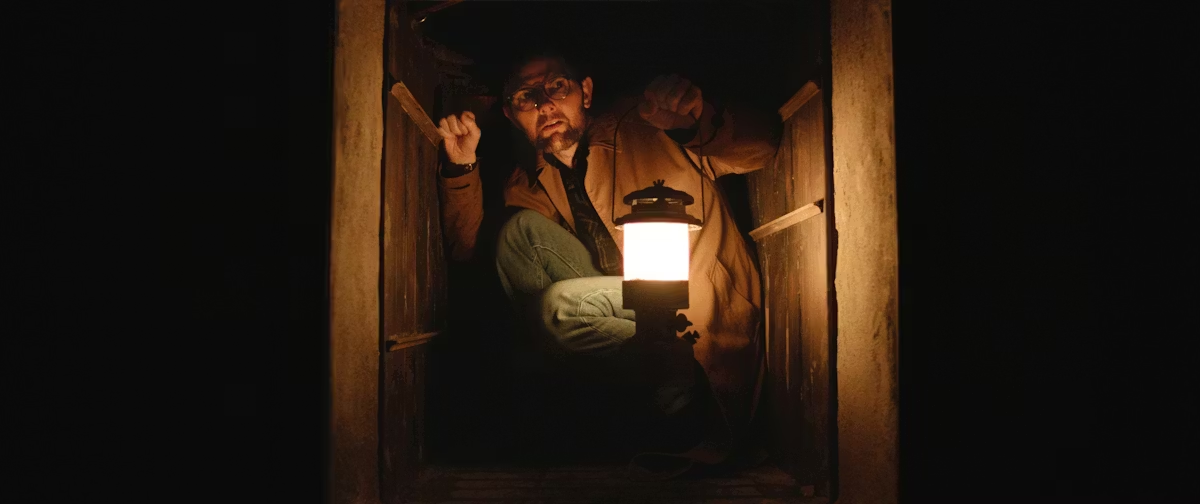
(SeaPRwire) – A well-executed jump scare remains unmatched in its power. While often relied upon by less adept filmmakers as a crutch or employed as a distraction from poor writing, these moments—when crafted precisely and used sparingly—can elevate a decent horror film into one of the year’s most terrifying experiences. This perfectly describes Hokum, Damian McCarthy’s chilling ghost story that stood out as one of SXSW’s finest premieres.
The film begins surprisingly in a desert setting, where a conquistador and his young servant traverse brutal sand dunes in pursuit of hidden treasure. Just as their goal appears within reach, their map becomes trapped inside a bottle. While the desperate conquistador considers killing his companion to secure the treasure, the scene abruptly shifts to author Ohm Bauman (Adam Scott) working alone in his dim, vacant home. He’s completing the final chapters of his acclaimed “Conquistador Trilogy,” the series that established his reputation. Upon finishing, he celebrates with a drink from his almost-empty whiskey glass, only to notice a silhouette on the stairs. He cautiously directs his lamp toward the staircase, revealing… nothing.
As quickly as the apparition vanishes, Hokum shifts locations. Bauman checks into a secluded Irish inn where his parents once honeymooned, intending to scatter their remains in the nearby forest. Yet something feels distinctly wrong about this aging, groaning establishment. A peculiar drifter prowls the surrounding woods. A bitter staff member routinely kills stray goats that roam onto the property. Disturbing small statues depicting wide-eyed children and creatures from Irish mythology decorate the premises. And naturally, there’s the locked honeymoon suite, rumored to be haunted by a witch.
At its core, Hokum functions as a haunted house story. What makes it extraordinary isn’t any groundbreaking innovation, but rather its demonstration that a meticulously constructed, traditional ghost narrative can still terrify audiences completely. The film represents McCarthy’s successor to his surprise success Oddity, which itself was a masterclass in suspense that confirmed the emerging horror filmmaker’s expertise in delivering classic scares.
Hokum relies entirely on time-honored horror methods—dark hallways, squeaking doors, and a foreboding wind whistling through vacant corridors. These elements create an intense, pervasive dread as a bellhop glimpses into the lightless honeymoon suite or as Bauman explores a hidden, cobwebbed cellar. Director McCarthy and cinematographer Colm Hogan draw inspiration from atmospheric gothic classics like Jack Clayton’s The Innocents to craft the film’s cold, somber mood, while also echoing the television work of Mike Flanagan, as seen in McCarthy’s earlier film. While Hokum initially seems more aligned with traditional gothic thrillers than the folk or trauma horror it occasionally suggests, its deep roots in Irish folk horror eventually emerge, adding a bold dimension that challenges the “prestigious” reputation trauma horror has acquired.
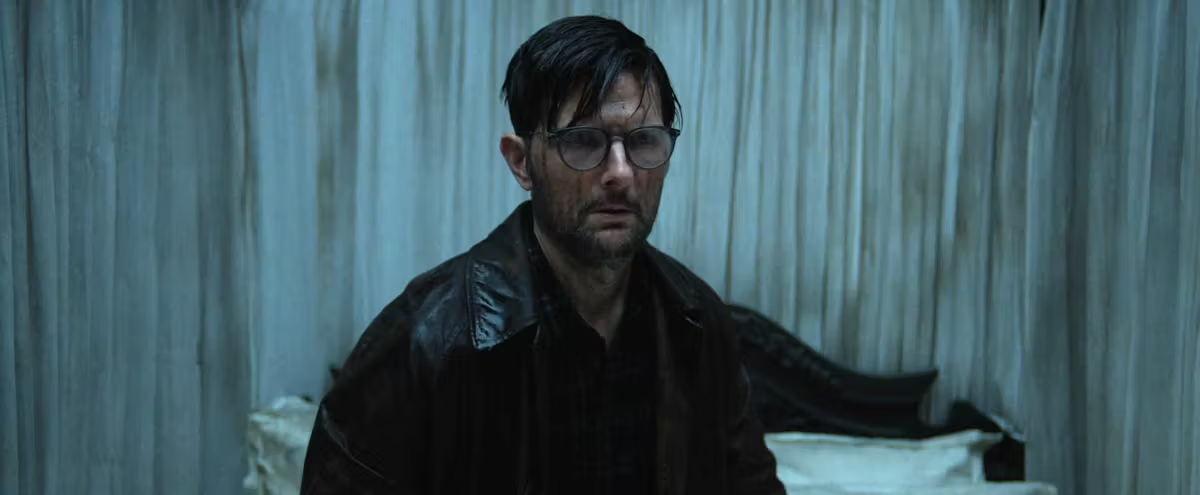
Nevertheless, Hokum does engage with modern horror’s fixation on grief: Bauman remains tormented by his mother’s tragic death, coping through harassment of his devoted readers and alcohol-induced oblivion. Scott, who has demonstrated his dramatic range in recent Severance episodes, delivers one of his strongest performances as the film’s drunken, abrasive author beset by both psychological and tangible terrors. Even as the story plays with Bauman’s sympathy, it doesn’t hesitate to subject him to cosmic torment, hinting at a diabolical retribution for his transgressions. This unusual blend of gothic horror and supernatural excitement succeeds remarkably well.
Delving deeper into Hokum would risk revealing crucial plot points, though one particular sequence matches last year’s Weapons in sheer fright and pacing. Following 90 minutes of meticulously constructed dread that saturates every shot, Hokum races toward a climactic conclusion that suggests a significant milestone for this year’s horror cinema. It’s precisely crafted filmmaking that becomes fully appreciable only after your pulse returns to normal and you regain your composure.
Hokum debuted at SXSW on March 14 and arrives in theaters May 1.
This article is provided by a third-party content provider. SeaPRwire (https://www.seaprwire.com/) makes no warranties or representations regarding its content.
Category: Top News, Daily News
SeaPRwire provides global press release distribution services for companies and organizations, covering more than 6,500 media outlets, 86,000 editors and journalists, and over 3.5 million end-user desktop and mobile apps. SeaPRwire supports multilingual press release distribution in English, Japanese, German, Korean, French, Russian, Indonesian, Malay, Vietnamese, Chinese, and more.