

(SeaPRwire) –
The entertainment industry circles the same argument every time a beloved property moves from page to screen. Cast the original description literally, and you alienate half the audience. Cast differently, and you ignite a firestorm of backlash. Rick Riordan’s Percy Jackson series has been dragged through both sides of that argument. Disney+ took the gamble. They handed Annabeth Chase to Leah Sava Jeffries, a Black actress, without contacts to fake gray eyes. The predictable chorus of outrage began to echo immediately. What makes this commercially interesting isn’t the casting itself. It’s the timing. Season 3 just kicked off, and it adapts The Titan’s Curse. That’s the third Percy Jackson book. The audience has already invested emotional capital in the Percy-Annabeth dynamic across two seasons. Every visual or character deviation now hits differently than it would have during the pilot. This is the pressure test the first season never faced. When the show was announced, fans agonized over two casting reveals. Percy Jackson himself and Annabeth Chase, the wise daughter of Athena who becomes his best friend and eventual love interest. Walker Scobell landed Percy. Jeffries landed Annabeth. Those picks have now been live on Disney+ for years. The patience factor is exhausted. The audience wants answers. They want to see if the adaptation holds together when the story gets more complex. The first season had room to establish characters without controversy compounding. Season 3 has no such luxury. The streaming market moves fast. Audiences don’t wait for consensus. They leave when the show stops rewarding them. Disney+ knows this better than anyone.
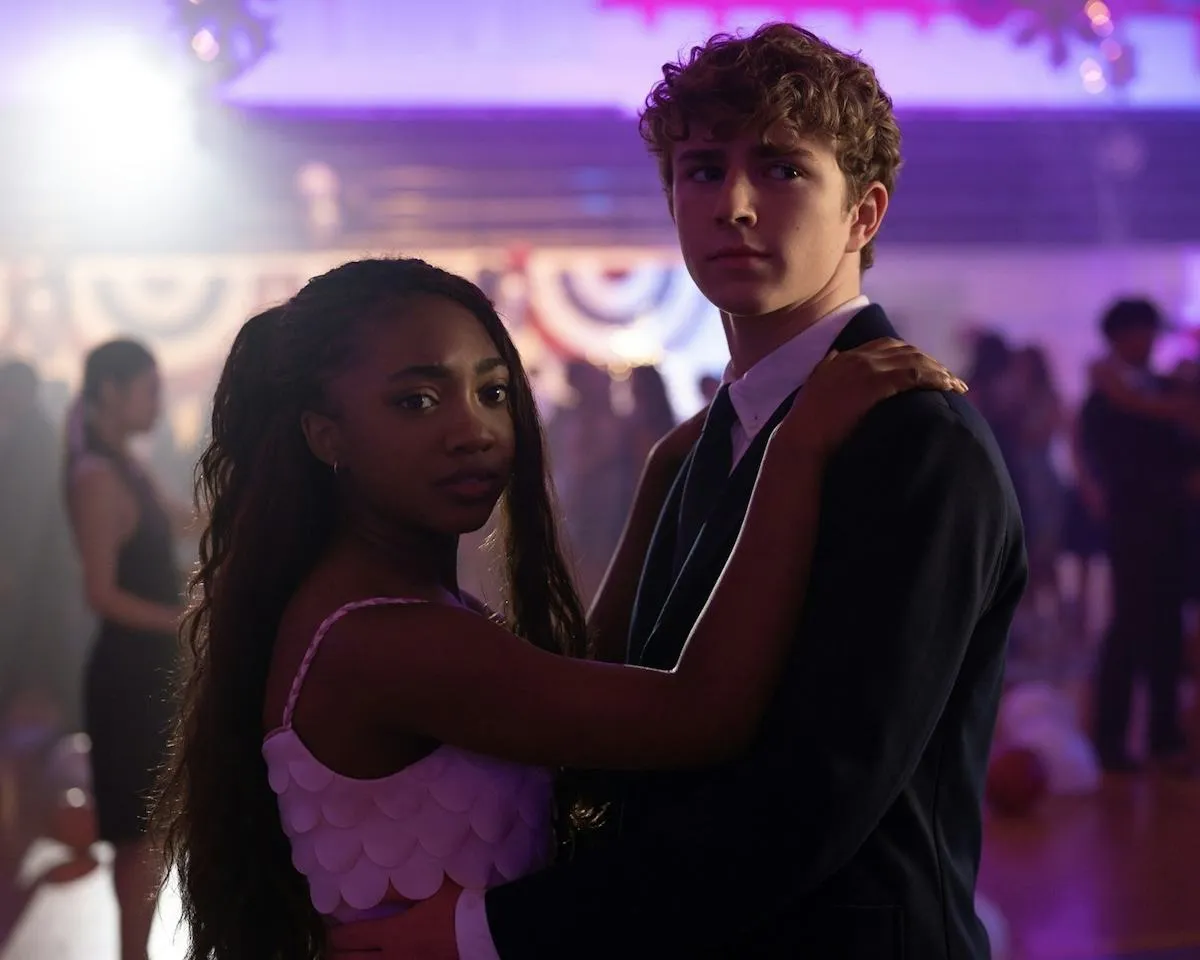
Rick Riordan describes Annabeth in The Lightning Thief as “almost exactly what I thought a stereotypical California girl would look like.” She has a deep tan and curly blonde hair, with stormy gray eyes identifying her as Athena’s daughter. Beyond appearance, she’s observant, wise, and fiercely loyal. She’s the one who usually comes up with plans for the main trio. She cares deeply about doing the right thing. The Disney+ production chose a fundamentally different visual direction. Jeffries was twelve when Season 1 filmed. She is now sixteen. In contrast, Alexandra Daddario played Annabeth in the 2010s Fox films, and she was well into her twenties at the time. The casting team also rejected contact lenses to artificially shift Jeffries’ eye color. Every choice ripples outward from a single creative decision. Annabeth’s appearance matters less than her role as the strategist of the main trio. The production has already established over two seasons that viewers accept Jeffries as Annabeth. The question now is whether Season 3’s narrative expansion can sustain that acceptance when character dynamics become more emotionally complex. As Season 3 starts, Percy and Annabeth are growing up. The feelings they’re developing for each other may get in the way of her priorities. That tension is new territory. It’s a direct adaptation of the book’s character arc. But it’s also a test of whether Jeffries can carry that emotional weight at sixteen. The book doesn’t shy away from that growing-up tension. The show has to earn it with actual screen time and genuine chemistry, not just plot mechanics. Some fans will argue that Annabeth’s physical description in the book was specific enough to feel canon-breaking if altered. Others will argue that character portrayal matters more than hair color. Riordan’s response has been consistent. He says once you see Leah as Annabeth, she will become exactly the way you imagine Annabeth. He says demigods come in all shapes and sizes. And that’s not changing as Percy Jackson and the Olympians enters Season 3. The production’s commitment to these choices is already a multi-year investment. You don’t keep a character alive for three seasons by accident. You keep them alive because the metrics justify it.
The true commercial intention behind these decisions runs much deeper than simple adaptation notes. Disney+ needs Annabeth to function as Percy’s intellectual anchor while their relationship develops. Jeffries’ age-accurate casting gives the production a timeline advantage. Percy and Annabeth grow up together across seasons. The Daddario-era films could never replicate that. In the book, Percy and Annabeth’s feelings for each other are a developing thread that gets in the way of priorities. The TV show is mirroring that same tension, but with actors who are actually the same age as the characters they play. The backlash Riordan described in 2022 wasn’t one-sided either. He noted the criticisms came from across the political spectrum, both right and left. That dual pressure tells you something important. Studios that cast broadly aren’t facing a coherent opposition. They are facing opportunistic outrage from multiple camps simultaneously. Riordan’s defense was pointed. He challenged critics to acknowledge Jeffries’ years of hard work, her talent, her tenacity, her focus, and her screen presence. He argued that refusing to believe her selection could be based on merit is, by definition, prejudice. He pointed out that these criticisms have come from across the political spectrum, right and left. The commercial calculus here is clear. A franchise that endures across seasons and platforms isn’t betting on casting purity. It’s betting on character fidelity and audience commitment. The Daddario films made their money on box office returns and nostalgia. The Disney+ series is built on streaming engagement metrics. Weekly watch hours, completion rates, subscriber retention. Those numbers don’t care about hair color. They care about whether viewers come back next episode. Jeffries’ casting has been live for years. The retention data has already been collected. Disney+ isn’t debating whether this works. They’re measuring how well it works. The industry is watching that measurement closely. Every new IP adaptation going through development right now is studying these retention curves. They want to know if the broader casting approach correlates with higher or lower engagement. The answer will determine the next wave of adaptation strategies.
The demigod market won’t wait for perfection. Streaming platforms are betting that character fidelity matters more than physical description fidelity. Percy Jackson and the Olympians entering Season 3 signals Disney+ confidence in this formula. If the show holds audience retention while pushing casting boundaries, other adaptations will follow. The next franchise needing a young protagonist will look at Percy Jackson’s numbers before booking a single casting director. The financial risk is concentrated in that retention metric. If viewers leave over casting complaints, the commercial argument evaporates. If viewers stay, the casting debate becomes a footnote in franchise history. Either way, the industry is extracting real data from this adaptation’s success or failure. That data will inform every major book-to-screen pipeline decision for the next decade. The next big IP adaptation won’t be making guesses. It’ll be reading the Percy Jackson retention curve. The casting wars aren’t about what readers imagine on the page. They’re about which version of a character can survive contact with a streaming audience and still generate revenue. Whoever reads this data correctly will own the next adaptation wave. Whoever ignores it will watch their franchise implode under the weight of its own casting arguments. The Percy Jackson retention curve is the single most valuable data asset in the current book-to-screen pipeline. And it’s being generated right now, episode by episode, on Disney+. The industry’s next move is coming. It’ll be based on what they see in the numbers. Not what fans argue about in comment sections.