(SeaPRwire) –
By: Logan Pierce
We’re used to major studios sanding down every edge of wide-release genre films to hit safe four-quadrant audience scores. Nicolas Winding Refn has spent the last 12 years actively fighting that trend, ever since his 2011 hit Drive made him a household name for casual film fans. His latest offering, Her Private Hell, doubles down on every polarizing quirk that has defined his post-Drive work, and it’s already splitting audiences straight down the middle.
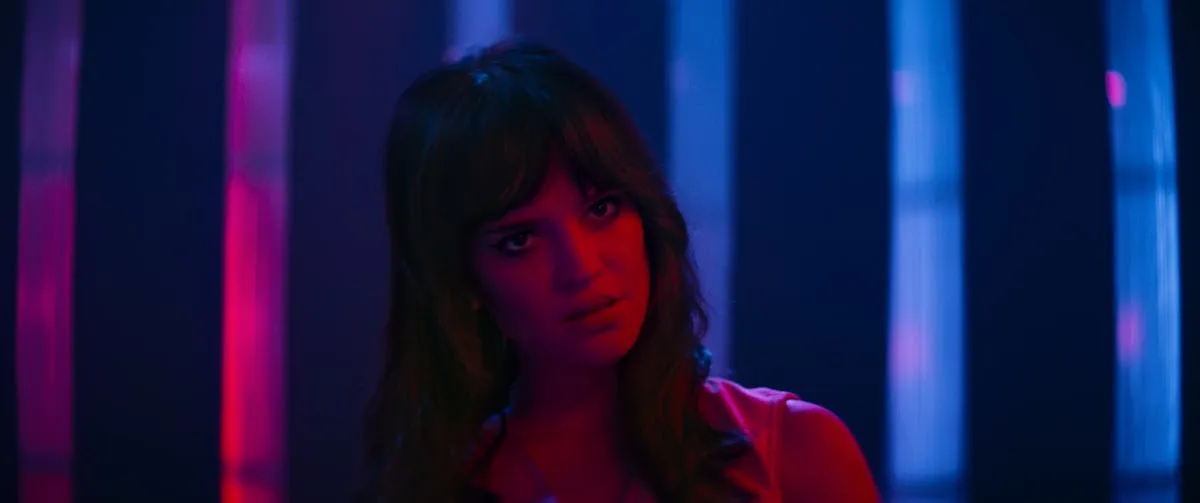
Her Private Hell is set in a fog-choked, Blade Runner-esque sci-fi city where supernatural urban legends become real. It weaves two loosely connected narratives: a vicious psychosexual feud between young actress Elle and her former lover turned stepmother Dominique, and a loner’s quest to find his missing daughter that pits him against a masked serial killer called The Leather Man. The film got savaged by critics when it premiered at Cannes earlier this year, and opens in U.S. theaters July 24 via NEON.
Refn pulls direct influence from 70s and 80s exploitation filmmakers like Jess Franco, Mario Bava, Dario Argento, and 60s Japanese pop cinema icon Seijun Suzuki. Plot logic takes a backseat to lush, high-contrast neon shots, equal-opportunity objectification of its lead cast, and unapologetically kinky, surreal imagery. Even diehard Refn fans admit large stretches of the film make no narrative sense, with characters barking at each other and random supernatural figures appearing with zero explanation.

Most mid-budget genre films released today are built to perform well on Rotten Tomatoes and drive streaming viewership numbers, with all rough edges filed off to avoid alienating casual viewers. NEON’s decision to pick up Her Private Hell for wide theatrical release is a deliberate bet on counterprogramming. The studio is targeting a specific niche of film fans that actively seek out transgressive, style-forward work that rejects mainstream narrative conventions, and they’re leaning into the divisive reviews as a marketing hook.

Refn has no interest in courting viewers who don’t already buy into his specific aesthetic, and he’s openly said he doesn’t care if large swathes of audiences hate his work. For studios, this kind of polarizing creator is increasingly valuable in a crowded media landscape. The small, loyal audience that loves his work will turn out for theatrical screenings, buy physical media copies, and drive organic social media buzz far more effectively than a generic, mid-tier streaming thriller with a 75% Rotten Tomatoes score.
Her Private Hell will turn a modest profit for NEON by the end of its theatrical run and become a cult favorite at midnight screenings for the next decade.
Author bio: Logan Pierce, independent entertainment industry business researcher and media strategy writer covering indie film distribution and niche audience monetization.