


(SeaPRwire) – By: Christian Pierce
A film born from a cancelled Marvel reboot is now doing something no superhero movie ever could. It made two men who spent the entire runtime trying to kill each other sit side by side at the end. That is not a minor creative flourish. That is a statement about where the medium is willing to bleed.
Mahershala Ali stepped away from a Blade franchise to work with writer-director Bassam Tariq on something far heavier. Orion Pictures released the result. The story follows Latif, a hitman whose wife dies and whose Muslim faith cracks under the weight of grief. His handler Mike, played by Laith Nakli, keeps offering contracts. Latif does not take them. He spends most of the runtime searching for a woman willing to nurse his infant daughter Zizi. The twist is not whether he finds her. The twist is who she belongs to.
The woman turns out to be a recent convert at the church of Father Hwan, played by John Cho. Hwan runs a crusade against pornography. That crusade forces him into collision with Hatty, a distributor of halal adult content played by Abubakr Ali. Hatty ends up tied to a chair in his own mansion. Latif refuses to hand him over. Violence escalates. An imam named Abdul Malik is murdered by Hwan’s followers. Latif’s children watch him kill. His daughter Fatiha sees blood on her father’s hands and stops seeing him as anything other than a monster.
This is where most thrillers reset toward action beats. Tariq resets toward theology.
The final confrontation takes place not in an alley or a warehouse. It takes place inside Hatty’s mansion during an impromptu worship service. Latif arrives with a machete. He is outnumbered and outgunned. Hwan shoots him several times in the back. Latif collapses. He prays. The screen holds on him long enough for the audience to believe the film is willing to let him die.
Then it pivots.
Tariq has stated that some viewers interpret this as Latif’s death, with the remainder of the film existing in the afterlife. The director also confirmed his original intention was different. Latif presses his face to the floor. He sees his daughter Fatiha pleading for his return. He hears her say bring Baba home. That moment pulls him back. He rises.
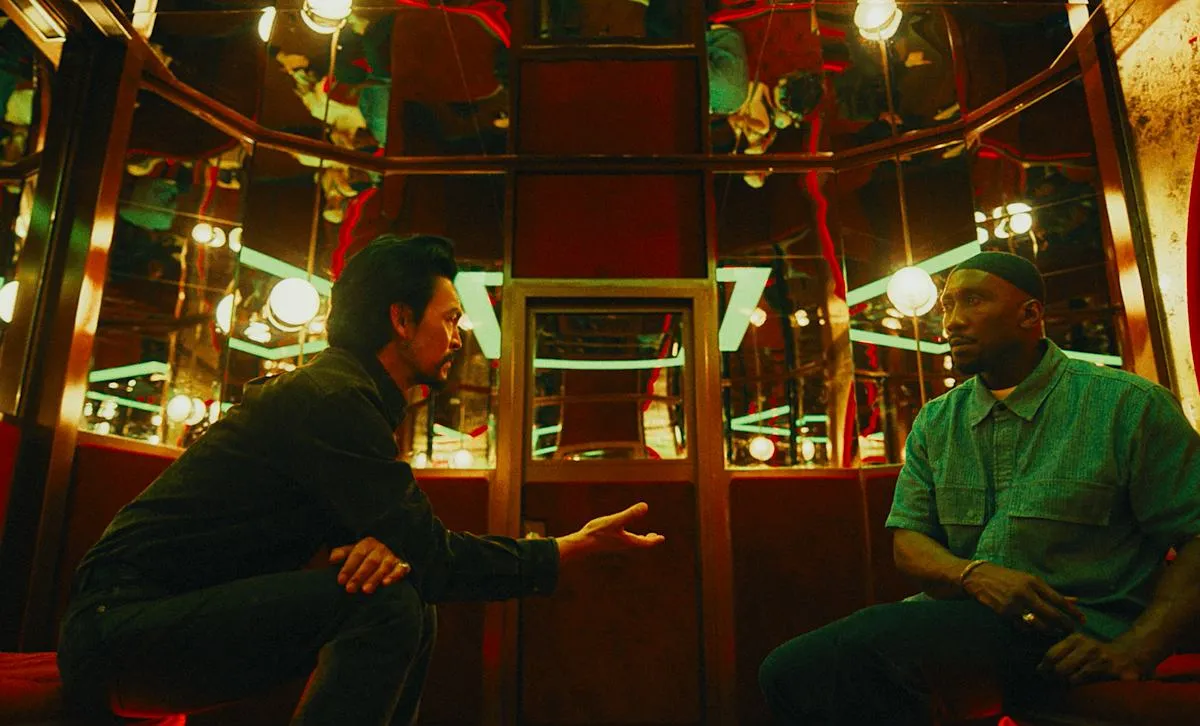
Hwan watches this happen and recognizes a pattern. Decades earlier, his own mother’s prayers brought him back from a near-death experience. Two men who justified bloodshed through faith realize they share the same anatomy of grace. They walk out of the building side by side. Not facing each other. Going the same direction.
John Cho described the staging shift explicitly. The original vision had them confronting each other. They changed it so both men moved toward the same exit. That choice carries more narrative weight than any gunshot in the picture.
This film survived production limbo. It dodged the corporate instinct to make it simpler. It trusted Mahershala Ali to carry moral ambiguity across two hours without a third-act speech. It let a hitman weep instead of quip. It made a mega-church pastor human without making him virtuous. And it delivered an ending where survival is earned through vulnerability rather than violence.
The commercial readout will arrive in weeks. The cultural readout arrived the moment the film let an assassin live because his daughter prayed for him instead of because he outshot everyone in the room. Studios spend millions to replicate the former outcome. They rarely attempt the latter.
Author bio: Christian Pierce, chief financial columnist and markets commentator covering entertainment industry economics and creative business strategy.