
(SeaPRwire) – By: Christian Pierce
The worst outcome for a movie is not a flop. It is a quiet burial. A studio takes a finished, expensive, genuinely good film and slides it into theaters with almost no support behind it. No billboards worth noticing. No press push. No reason for anyone outside the animation bubble to know it exists. That is what is happening to Forgotten Island right now. DreamWorks made it. Universal is distributing it. It is playing in theaters and most of the audience that would love it has never seen a trailer.
That is not bad luck. It is the predictable result of a business model. Theatrical animation has consolidated around known brands. Parents buy tickets for characters their children already recognize. A sequel sells itself. An original has to be sold, and selling costs money. Marketing budgets follow expected franchise value. A new property has no franchise value on paper. So the new property gets the smallest allocation in the room. Then it underperforms. Then the underperformance becomes the argument against making another one. The loop closes tight enough that nobody inside it has to take responsibility for the result.
Look at the title alone. Forgotten Island is generic and forgettable. It reads like a cheap sequel to Forbidden Planet. Someone approved that name. Someone else approved a campaign that never bothered to correct the impression. The film inside the frame is the opposite of forgettable. It is loud, specific and alive. That gap between the label and the product is a marketing failure, not a creative one.
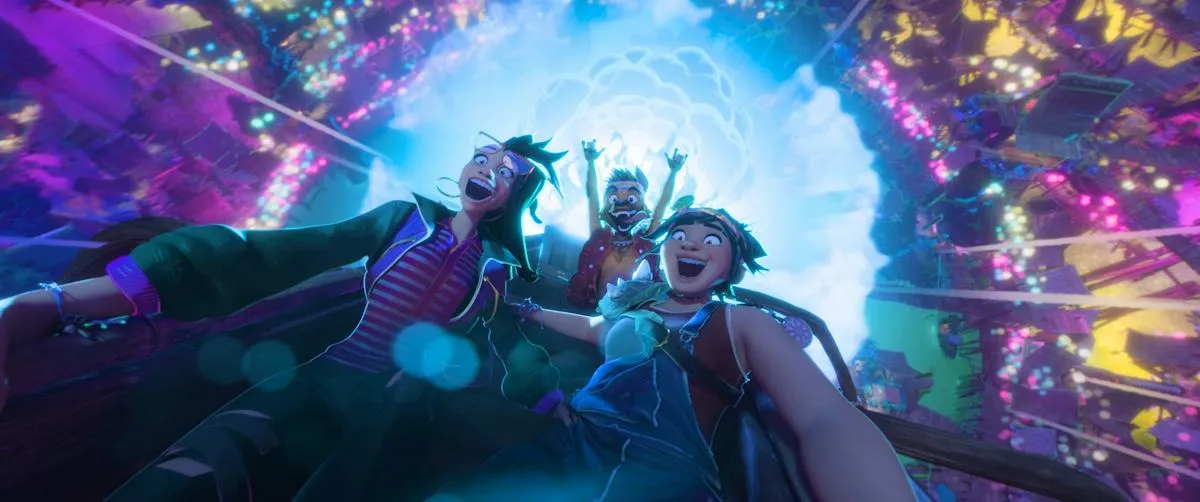
Now consider what Universal actually has on its hands. Forgotten Island comes from Joel Crawford and Januel Mercado, the team behind Puss in Boots: The Last Wish. They wrote and directed this one. It follows Jo, voiced by H.E.R., and Raissa, voiced by Liza Soberano, growing up in the Philippines in the ’90s. The two are bonded by a shared belief in Nakali, a mythical island populated by mystical residents, including the vampiric Manananggal. Jo’s grandmother Lola, voiced by Dolly de Leon, visited Nakali as a young girl and tells them stories about her time there. Lola dies. Jo is left an orphan. Raissa becomes a science prodigy and gets accepted to Caltech. Jo, terrified of being left behind, finds a glowing sand dollar on the beach, opens a portal, and persuades Raissa to jump in with her.
They wake on the beach of Nakali the next morning with no memory of what happened. A were-dog named Raww, voiced by Dave Franco, helps them retrace the steps of that legendary night. A memory demon called Batiba, voiced by Jenny Slate, tries to entice them. A vengeful Manang, voiced by Lea Salonga, tries to kill them. Manny Jacinto voices a giant Tiyanak baby demon. Kevin McCann voices Mermahn. The film is packed with characters, plot, tones and colors. It takes the 2D/3D hybrid that Puss in Boots: The Last Wish pushed forward and moves it into another realm. It cuts into 2D interludes styled after ’90s cartoons like Street Fighter and Sailor Moon. Several sequences play out like full music videos. Karaoke, food, music, all of it rooted in Filipino culture and mythology. The pacing is relentless, closer to Speed Racer in its anarchy than to anything else in the current animated field.
Under all of that sits the friendship between Jo and Raissa. It bends, then breaks. Jo keeps dragging out the adventure so her friend will stay. Raissa blames Jo for stranding them while her flight to the U.S. ticks closer. That emotional core is what keeps the chaos from swallowing the film. This is one of the most innovative animated movies of the decade. It is being released without much fanfare. In a better world, it would be this year’s KPop Demon Hunters.
So why does a studio starve a film like this? Follow the cash. Theatrical animation lives and dies on opening weekend. Opening weekend is manufactured by marketing spend. Marketing spend is allocated by projected franchise value. Original intellectual property has no proven franchise value, so it receives the smallest allocation, so it opens small, so it is declared a failure. The studio then holds a data point proving that originals do not work. The data point was manufactured. It is still a data point. It will be cited in the next greenlight meeting, and the meeting after that.
Meanwhile, the films that break out, the ones that become cultural events instead of line items, do so because a large audience finds them at roughly the same time. Word of mouth needs a floor to stand on. An empty theater on a Friday night generates no word of mouth. Nobody walks out of a film they never bought a ticket for, and nobody recommends a title they have never heard pronounced out loud.
None of this is unique to Forgotten Island. It is the structural condition of original animation in the theatrical market right now. Theatrical is becoming a franchise-only channel. Originals migrate to streaming, where they function as acquisition bait and then get buried behind the same six rows of thumbnails every time you open the app. The talent follows the money and the marketing. Crawford and Mercado will take their next idea to whoever will actually sell it. A studio that stops making originals eventually discovers it cannot make sequels either, because the people who make sequels good came in through the original door.
If Universal wants to own an animation brand ten years from now, it has a decision to make with the next original it greenlights. Put real marketing weight behind it, or stop greenlighting them and admit what the company has become. There is no third option that works. Half-hearted releases produce dead films and false conclusions, and the false conclusions are the expensive part.
Author bio: Christian Pierce is a chief financial columnist and markets commentator covering media, entertainment capital allocation and the economics of franchise-driven studios.