
(SeaPRwire) – By: Logan Pierce
The Zellner Brothers are making their wildest film yet. Alpha Gang just premiered at the Toronto International Film Festival. It also played Fantastic Fest. No theatrical release date is set. The press kit does not mention a distributor. That silence tells you everything.
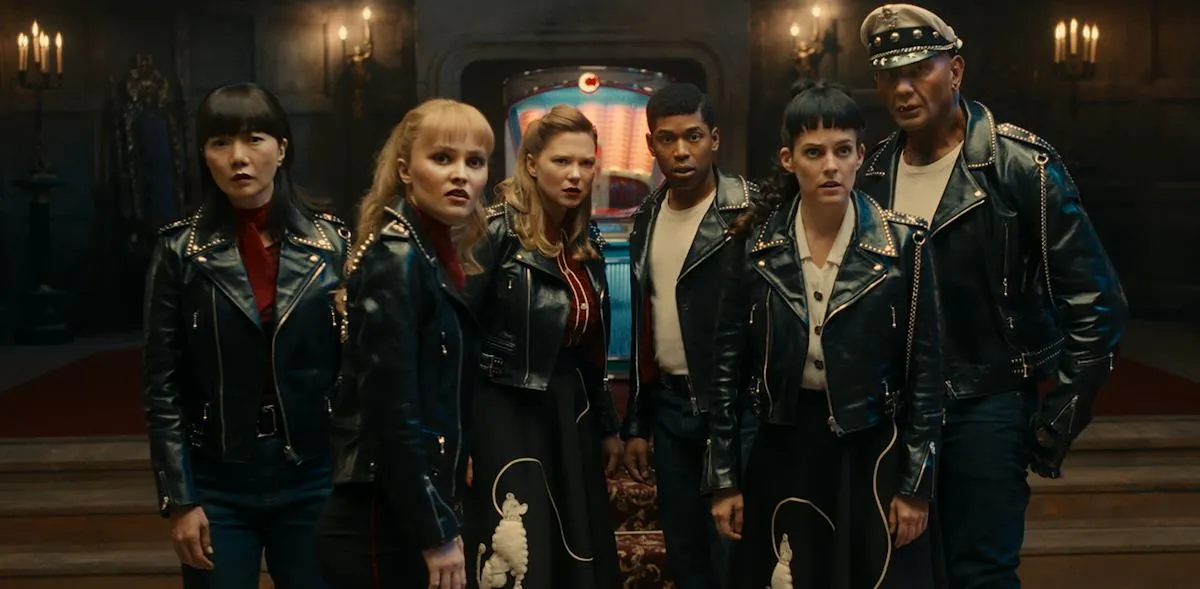
The film centers on six extraterrestrial invaders sent to a war-torn pocket of Communist Eastern Europe. Their mission is planetary conquest. Their methods involve staring at toilet bowls and debating whether love is a disease. Léa Seydoux plays Alpha One. Kelvin Harrison Jr. is Alpha Three. Doona Bae is Alpha Five. Dave Bautista appears as Alpha Two. Chris Pine joins as the surprise seventh member Alpha Seven. Riley Keough returns from Sasquatch Sunset as Alpha Six. Lily-Rose Depp gives herself a name first. The cast reads like a prestige arbitrage play. These are actors choosing strangeness over franchise work. That is the new currency in indie film.
The production design operates at Wes Anderson levels of specificity. The cast inhabits a medieval castle fortress. They wear 1950s-style biker wardrobes. Their leather jackets produce high-frequency squeaks in the sound mix. The film features doo-wop and classic country musical sequences. The Zellners apply their logo monogrammed to everything on screen. Their approach is less finicky than Anderson. The result is anarchy with excellent taste. Cate Blanchett arrives later as a sinister Beta Gang leader in 1970s-inspired styling. Every frame is designed. Nothing is accidental.
This is what happens when creative control meets an empty distribution plan. The Zellners made Sasquatch Sunset the same way. That film also opened at TIFF. It followed a family of Sasquatches bewildered by human encroachment. Riley Keough gave birth inside a Bigfoot suit for that project. Alpha Gang asks less of her physically. It also asks less emotionally. The film is a pleasant hang. It is not a substantive one. The alien invasion plot arrives too late to matter. It functions as an ending rather than a climax. Distribution-wise this pattern is familiar. Festival buzz does not equal box office traction. The gap between critical enthusiasm and commercial returns widens every year for art-house hybrids.
The business question is straightforward. Who buys this film and at what price? The cast carries weight. Seydoux and Blanchett command international attention. Bautista brings mainstream name recognition. Pine supplies the comedic spark. None of that overrides the fundamental problem. A film without a release date and without a distribution commitment is a product waiting for a buyer. That is not unusual in the current market. It is the new normal for mid-budget eccentric comedies. The Zellners have built something visually rich. They have assembled the right people. What they have not solved is the transaction.
The real story here is not the movie. It is the silence around it. Every frame is considered. Every costume is deliberate. Every joke lands with alien detachment. The film is fully realized. The business case is absent. That combination defines a generation of indie filmmakers who can conceive, produce, and complete projects without a distribution strategy in place. The Zellners are talented. Their next step depends on finding someone willing to bet on weirdness.
Author bio: Logan Pierce is an independent business researcher and corporate governance writer on Medium, tracking the commercial realities behind cultural production.