(SeaPRwire) – Over the three decades since the original Resident Evil horrified gamers exploring the malevolent Spencer mansion, numerous on-screen efforts to capture its unique horror have fallen short. The film series by Paul W.S. Anderson from 2002 to 2017, Johannes Roberts’ 2021 film Welcome to Raccoon City, and a tonally mismatched Netflix teen drama in 2022 all failed to live up to the source material. Even Zach Cregger’s planned reboot faces a challenge in winning over fans, as it too is straying from the game’s plot.
However, the shortcomings of these adaptations are not due to a failure to follow the story directly, but rather a misjudgment of tone and atmosphere. Anderson’s movies were clear products of Hollywood’s fixation on emulating The Matrix, while Welcome to Raccoon City has the feel of an action-horror film like Aliens. Every live-action project carrying the franchise name has failed to replicate the essential feeling of the games. This suggests the most effective version is actually another film connected to gaming that came out before the original Resident Evil, serving as an early project for a Japanese director who would later become a modern horror master.
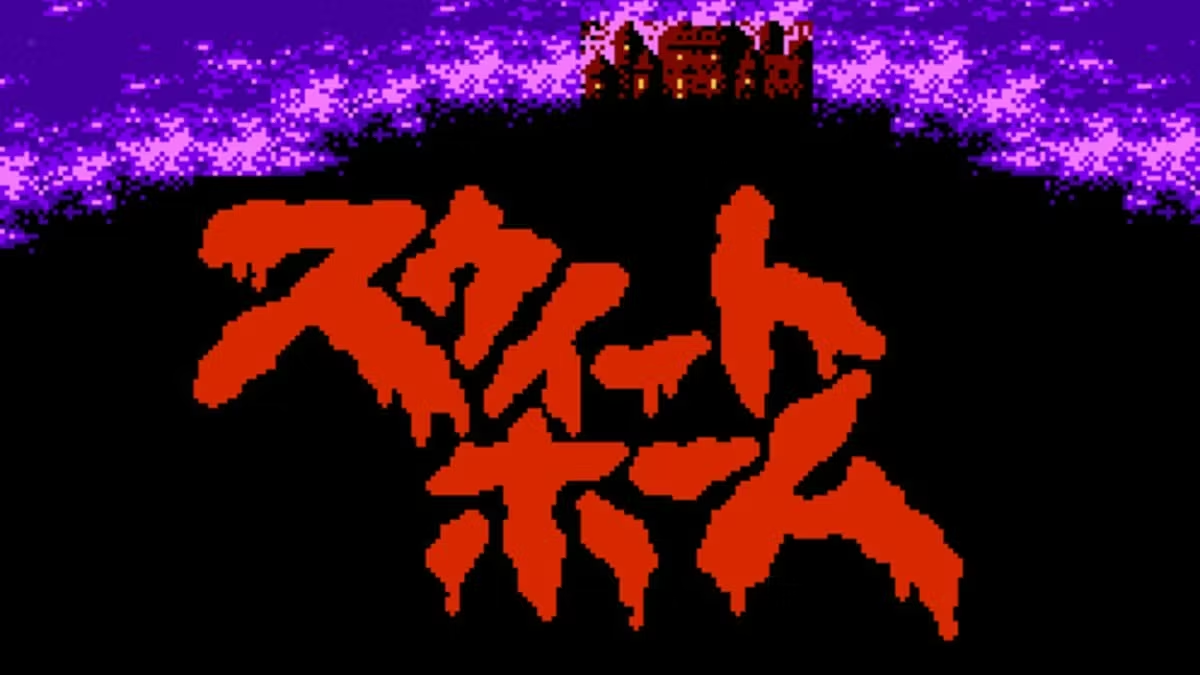
Labeling Sweet Home as a Resident Evil “adaptation” might seem misleading, as its source game predates Resident Evil‘s 1996 horror revolution by seven years. Yet what other adaptors missed is that the original game was fundamentally a haunted-house tale before it expanded into a zombie saga. The Spencer mansion, with its Gothic design and hidden family secrets, evokes classics like Wuthering Heights or Shirley Jackson’s Hill House more than the decaying farmhouse in Romero’s Night of the Living Dead. The zombies are merely one of many grotesque threats encountered, and their nature as reanimated dead is not far removed from the ghosts common in gothic fiction.
Sweet Home replicates that haunted vibe and was a key inspiration for Resident Evil‘s mood. Both the film and its simultaneous game adaptation track a documentary team probing the mysteries of the Mamiya house, a decaying estate formerly owned by a renowned painter. The horror often stems from characters discovering tragic artifacts, such as a coffin or a revealing diary, and gradually assembling the puzzle of the house’s dark history.
This narrative approach is shared by both Sweet Home‘s game and the original Resident Evil, and there is a parallel in the stories’ catalysts. The pitiful ghost Lady Mamiya, whose evil influence springs from despair, is strikingly similar to Lisa Trevor, a character introduced in the 2002 GameCube remake of Resident Evil who is doomed to roam the mansion as the T-Virus’s first victim.
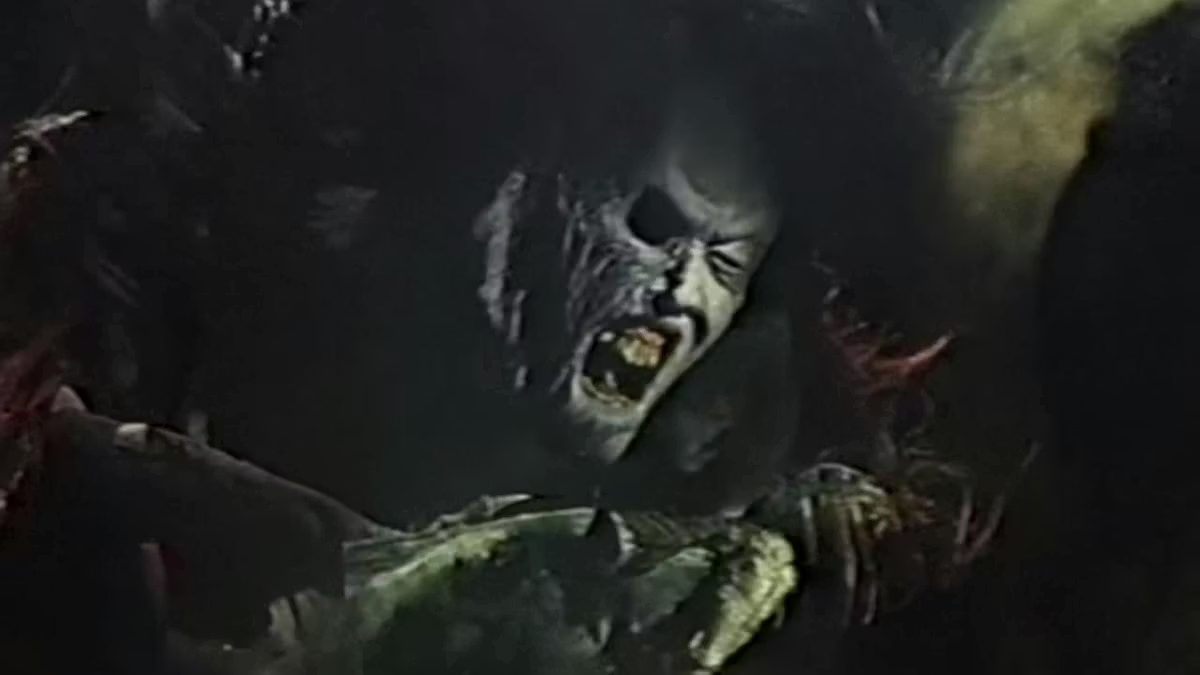
Beyond atmosphere, viewing Sweet Home with knowledge of its influence inevitably brings to mind the gruesome demises of Resident Evil’s Bravo Team. While zombies are the game’s hallmark, Bravo Team members suffer uniquely horrible ends. Similarly, the documentary crew in the film is eliminated through a series of nightmare scenarios. Although there is no zombie virus, the film mirrors Resident Evil in presenting houses filled with supernatural perils waiting for unprepared guests.
Furthermore, unlike official Resident Evil adaptations, Sweet Home successfully incorporates an element vital to the game experience: moments of humor. In the game, much comedy is unintentional, arising from its dated qualities, but there is a charm to the obliviousness of characters like Chris and Jill. This type of comedic irony is heavily present in Sweet Home‘s first half, as the lighthearted documentarians joke around, completely ignorant of the horror that lies ahead.
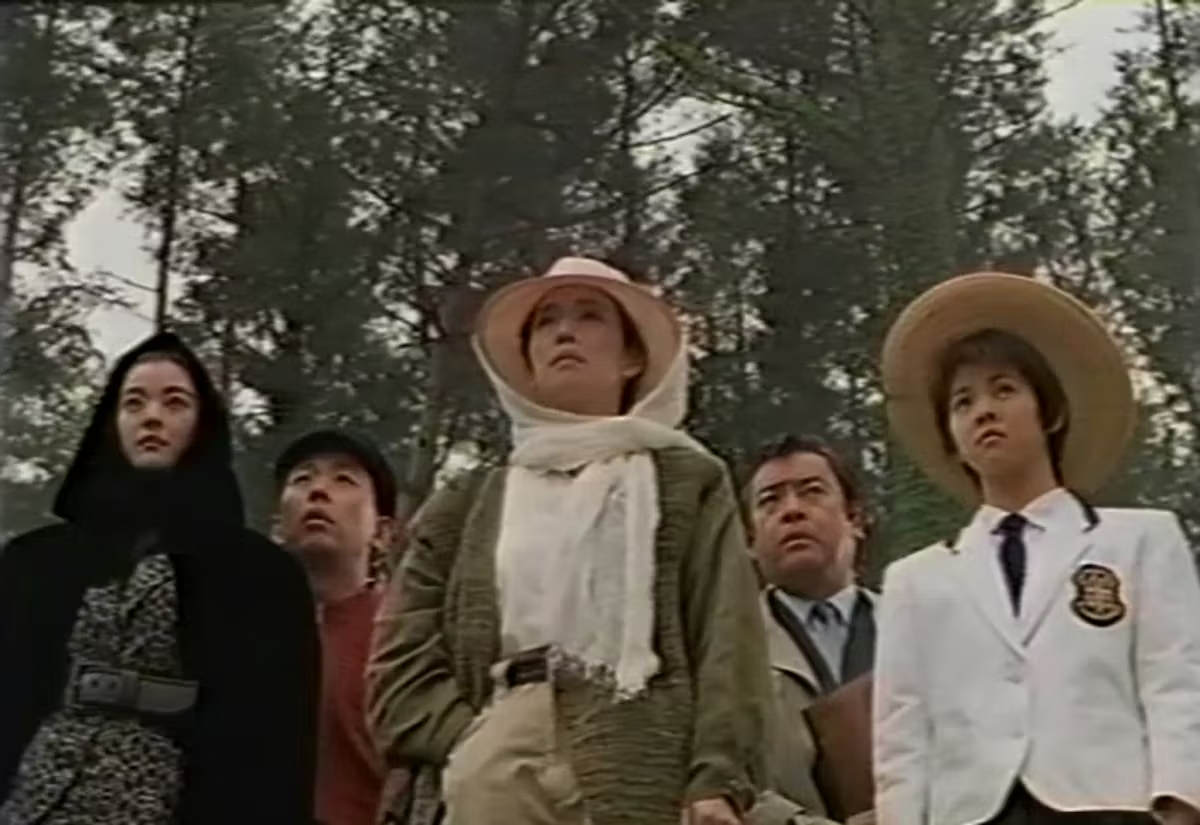
While director Kiyoshi Kurosawa would later create more acclaimed horror films like Cure and Pulse, Sweet Home offered an early look at the slow-building dread that defines his style. This sensation is pervasive in Resident Evil; the enduring fear comes not from zombie hordes, but from the anticipation of impending doom and the helplessness to stop it.
Kurosawa’s skill lies in his mastery of this feeling. From the start, as the unsuspecting protagonists enter the Mamiya house, the audience senses fate pulling them toward a horrific revelation. Sweet Home is the best unofficial Resident Evil adaptation not just because it inspired the game, but because it perfectly captures the sense of doom that fills the Spencer mansion.
Sweet Home is available on the Internet Archive.
This article is provided by a third-party content provider. SeaPRwire (https://www.seaprwire.com/) makes no warranties or representations regarding its content.
Category: Top News, Daily News
SeaPRwire provides global press release distribution services for companies and organizations, covering more than 6,500 media outlets, 86,000 editors and journalists, and over 3.5 million end-user desktop and mobile apps. SeaPRwire supports multilingual press release distribution in English, Japanese, German, Korean, French, Russian, Indonesian, Malay, Vietnamese, Chinese, and more.