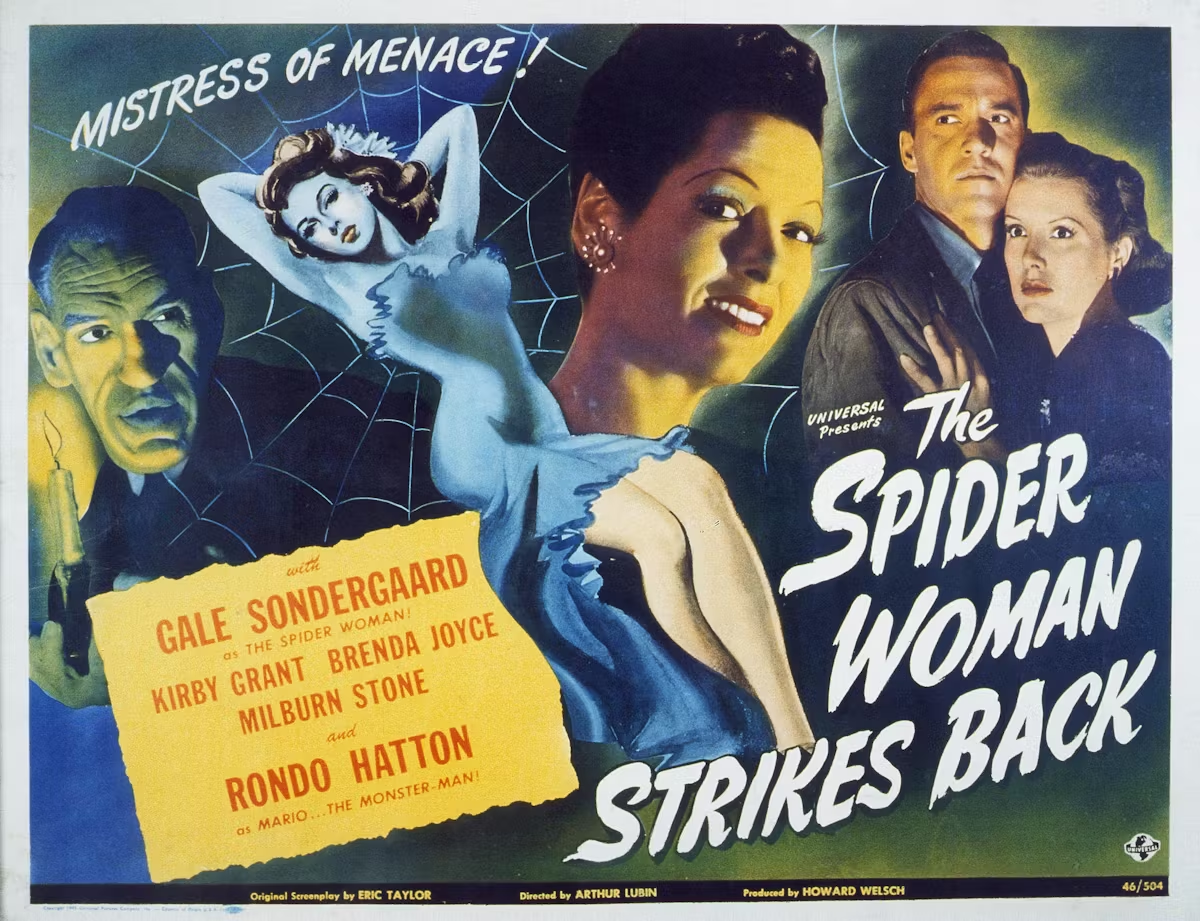
(SeaPRwire) – After putting their “big four” movie monsters through every imaginable scenario, Universal spent much of 1946 frantically searching for a new villain to launch a fresh franchise. They tried pitching the public a possessed cat (The Cat Creeps), a Victorian werewolf woman (She-Wolf of London), and — cruelly exploiting leading actor Rondo Hatton’s growth disorder — a disfigured killer (The Brute Man, House of Horrors). Yet the first to debut was a blood-collecting, fake-blind plant fanatic in The Spider Woman Strikes Back. Unluckily, this film, later disowned by both its director and lead star, set the tone for the low-budget B-movies that followed.
It’s scarcely surprising that this muddled thriller, which marks its 80th anniversary today, fell flat. Reluctant filmmaker Arthur Lubin, who later found a peculiar niche in anthropomorphic horse comedies (Mister Ed, Francis the Talking Mule), was threatened with suspension if he declined the project. Under contract with the same studio, its star Gale Sondergaard — who that year delivered an Oscar-nominated performance in Anna and the King of Siam — also had little choice in the matter.
Lubin clearly displays little passion for the genre; the self-declared flop, crammed into a short 59 minutes, suggests he wanted moviegoers to forget his role as quickly as possible. Sondergaard, however, is the film’s bright spot, fully committing to a scheming, Machiavellian character that, in other hands, might have been as complex as her sacrificial spiders. This isn’t a Sandra Bullock case of simultaneous Oscar and Razzie recognition.
Confusingly, the Spider Woman here has no connection to the character Sondergaard played in the Sherlock Holmes film The Spider Woman three years prior. Instead of Adrea Spedding, a “female Moriarty” who drives men to suicide, the villain here is Zenobia Dollard, a fabulously named wealthy rancher with an unusually high rate of personal assistant turnover.
The intricate schemer is all smiles initially when welcoming her latest employee/victim Jean (Brenda Joyce, taking a break from playing Jane in Tarzan films), an out-of-towner whose naivety is highlighted by her immediate admission, “Nobody even knows I’m here.” There’s even a hint — extremely subtle, fitting for the Hays Code era — of a romantic tension between them.
However, Zenobia’s nightly habit of serving Jean warm milk to aid sleep isn’t as kind as it seems. The drink is laced with a sedative, allowing her and mute servant Mario (the aforementioned Hatton) to draw blood from Jean, feed it to spiders consumed by her carnivorous plants, and create a botanical serum meant to kill cattle on land she desires, leaving farmers with no option but to sell. This is far from an ordinary takeover plan.
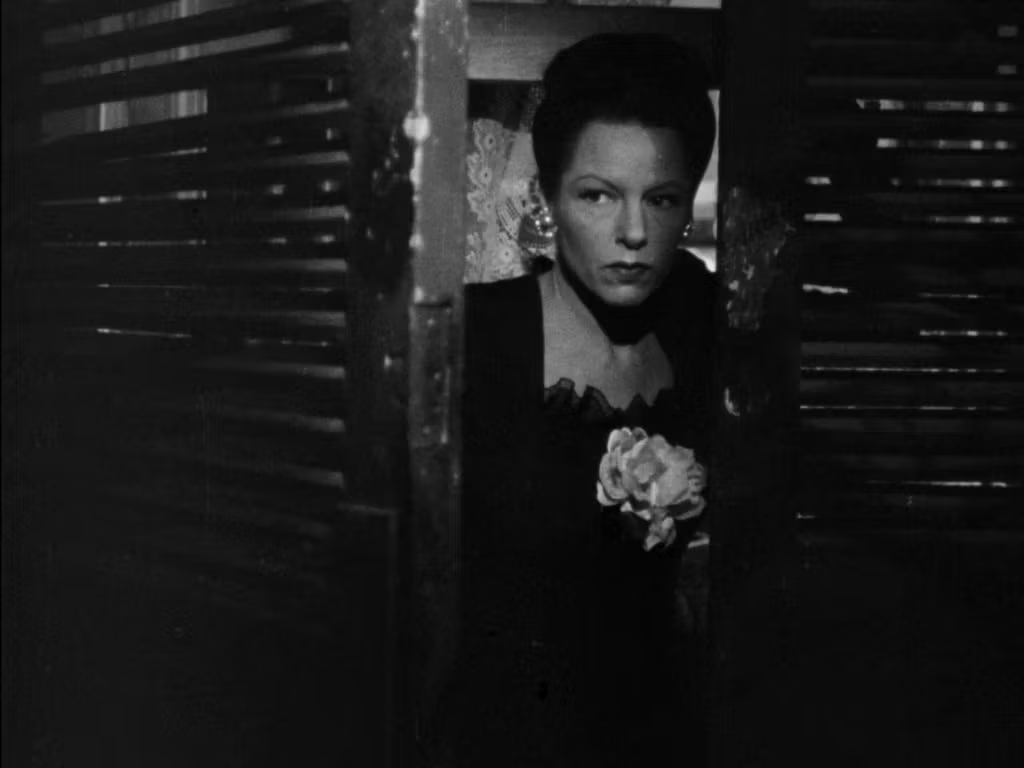
It’s a nightmarish, if somewhat Scooby-Doo-like, scenario, yet the film seems oddly hesitant to explore it. The Spider Woman Strikes Back leaves most of the “striking back” to the viewer’s imagination. There are glimpses of Zenobia’s true malice — like the menacing way she coos “you beautiful creatures” to her beloved plants. And there’s an unsettling chill in shadowy scenes where she and Mario loom over an unconscious Jean.
Still, as a film meant to introduce a worthy successor to Dracula and The Mummy, it’s a strangely dull, unthreatening affair. Only the climactic scene, where Jean’s ex-boyfriend Hal (Kirby Grant) acts as a hero by rescuing her from a burning basement, is likely to excite. Insensitive producers, publicizing that Hatton — who tragically died before the premiere — needed no makeup, appeared to think his appearance alone would shock audiences (another reason Sondergaard reportedly resented the project).
Who knows if some horror was cut from the film? The movie was clearly butchered in editing, with several of the dozen credited actors never appearing and plot points referenced — like a last-minute fight between Jean and Hal — without prior context. Still, even with fixes, it would have needed significant work. The fact that one Louisiana theater felt compelled to issue a warning (“We cannot accept responsibility for teeth broken from chattering, curls lost when hair stands on end, chilled spines, jitters, nightmares, or any other conditions”) is nearly as baffling as the script.
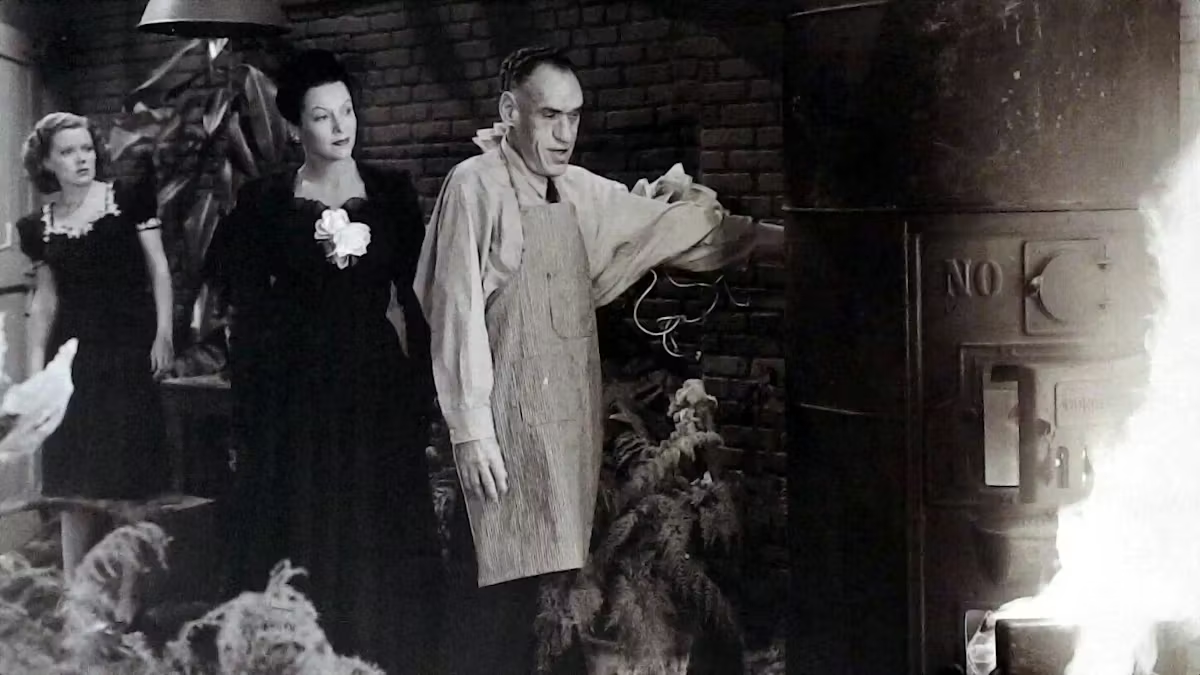
In case it wasn’t clear, Zenobia’s blindness was a ruse; she can see perfectly, using the act to avoid detection by law enforcement. Sondergaard is just as captivating as the exposed murderous fraud as she is as the sweet, helpless “Lady” with a capital L. “You’re dying Jean, just like the others… but you’ll live on in these beautiful plants,” she tells her weakened employee shortly before inquisitive Hal pulls a “just one more thing” à la Columbo, and her plans literally go up in flames.
It’s a top-tier performance in a low-quality film, one that deserved sequels with a more enthusiastic director and far less ableism. Yet like all the subpar Universal monster movies that followed, The Spider Woman Strikes Back flopped, and Zenobia was never seen again (Sondergaard, shunned after her husband Herbert Biberman was convicted as part of the pro-Communist Hollywood Ten, also faded from view). It may not have been the final end to the studio’s horror era, but it was perhaps the most impactful.
This article is provided by a third-party content provider. SeaPRwire (https://www.seaprwire.com/) makes no warranties or representations regarding its content.
Category: Top News, Daily News
SeaPRwire provides global press release distribution services for companies and organizations, covering more than 6,500 media outlets, 86,000 editors and journalists, and over 3.5 million end-user desktop and mobile apps. SeaPRwire supports multilingual press release distribution in English, Japanese, German, Korean, French, Russian, Indonesian, Malay, Vietnamese, Chinese, and more.