(SeaPRwire) – By: Lucas Caldwell
The line between reality and fiction has completely evaporated. We aren’t watching escapism anymore; we are effectively watching documentation of the next five years. The 2026 sci-fi slate isn’t predicting the future. It is debugging the present. The genre has shifted from asking “what if” to asking “what now,” driven by an AI sector that moves faster than our ability to regulate it. These stories are no longer flights of fancy. They are warning labels slapped directly onto the server rack. Every frame feels like a simulation running in the background of our actual lives, predicting the crash.
*Paradise* Season 2 expanded beyond the bunker with shocking AI twists and time shifts. *Redux Redux* weaponized memory across infinite parallel universes in the dusty Southwest. *For All Mankind* Season 5 continued its dominance with a Mars revolution and a mission to Titan. *The Boroughs* mixed aging and supernatural mystery in a retirement community before Netflix canceled it. *X-Men ’97* Season 2 leaned into time-travel paradoxes, outperforming big-screen adaptations. These titles represent the bleeding edge of narrative engineering, pushing boundaries that traditional media cannot touch or even comprehend.
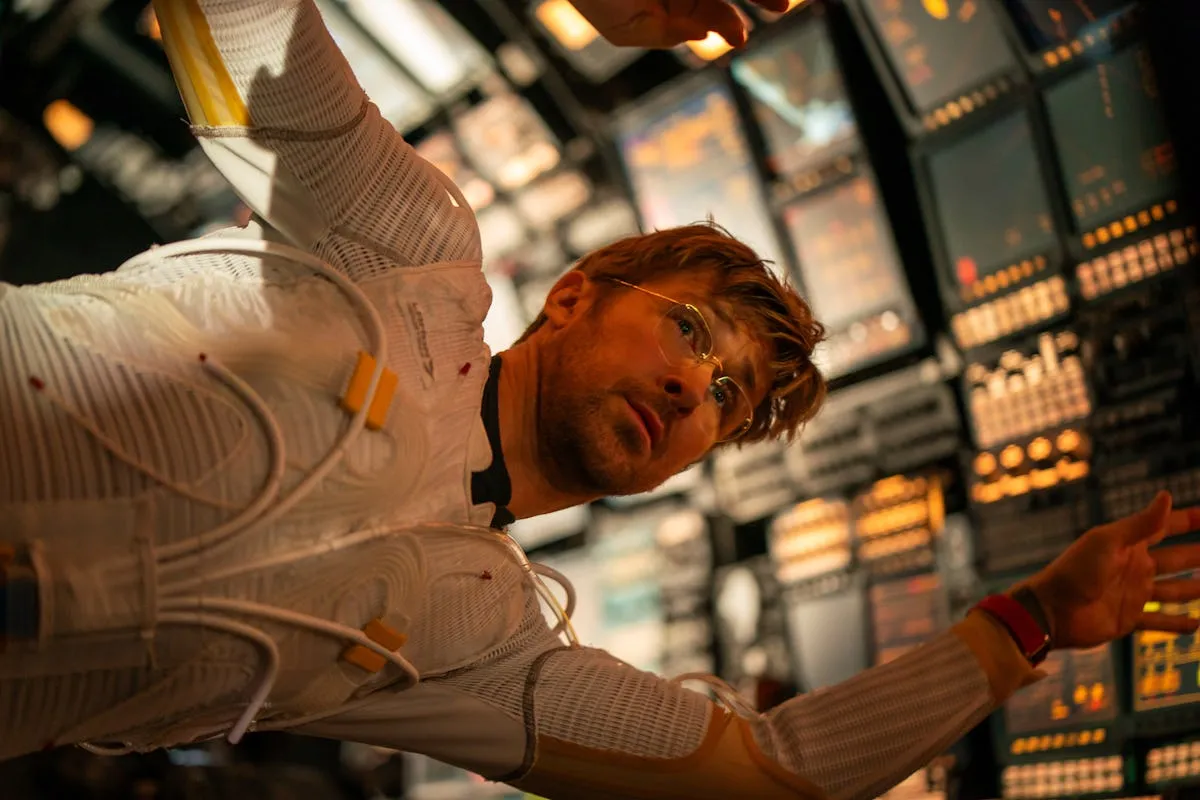
*Disclosure Day* brought Spielbergian hope back to alien conspiracy thrillers. *Nirvanna the Band the Show the Movie* sent slackers back to 2008 in a chaotic time-travel riff. *Good Luck, Have Fun, Don’t Die* forced us to laugh at AI apocalypse scenarios. *I Love Boosters* escalated a heist into a class war involving transmutation devices and skinwalkers. *Project Hail Mary* claimed the top spot as the year’s definitive feel-good epic. Each project tackles the specific technological dread that keeps us awake at night, staring at the ceiling.
Look closer at the subtext. It is a catalog of our current neuroses. *Paradise* and *Good Luck, Have Fun, Don’t Die* are processing our fear of an AI takeover. *For All Mankind* and *Project Hail Mary* reflect the commercial space race accelerating outside the windows. *I Love Boosters* isn’t just a movie; it is a critique of late-stage capitalism and labor exploitation. The writers are coding our economic anxiety directly into the script. We are consuming our own anxieties as entertainment products to feel something real.
The industry is eating its own tail. Netflix cancels a hit like *The Boroughs* despite fan reaction, proving algorithms still dictate survival over quality. Meanwhile, established IP like *X-Men* and *For All Mankind* carries the weight of entire streaming platforms. We are seeing a bifurcation where indie spirit like *Redux Redux* fights for oxygen against massive corporate franchises. The tech sector’s consolidation is mirrored on screen. Content is no longer king; data retention is the only monarch that matters in this economy.
If these scripts are accurate simulations, we are in for a decade of chaotic class warfare and sentient machines.
Author bio: Lucas Caldwell, a tech opinion leader with millions of followers on X/Twitter.