(SeaPRwire) – By: Lucas Caldwell
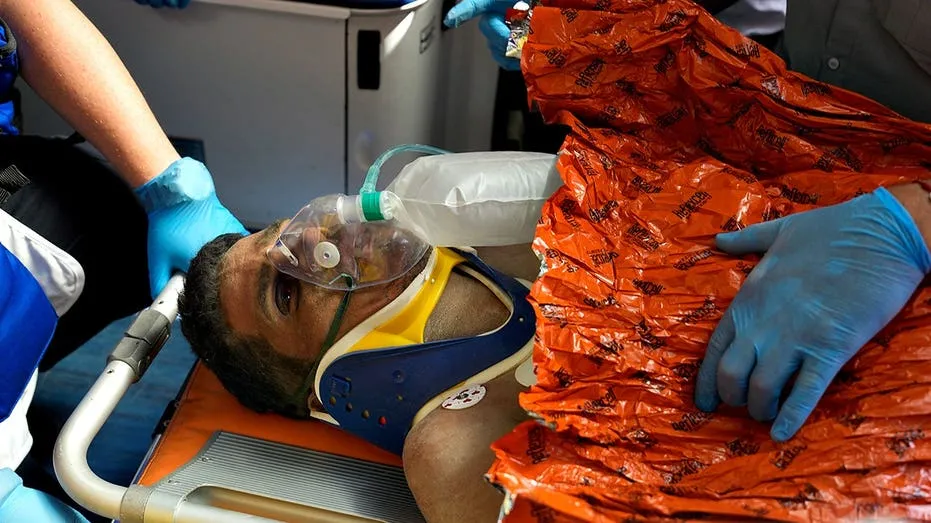
We obsess over smart sensors, AI evacuation drills, and earthquake early warning systems. Meanwhile, a 43-year-old security guard survived eight days under a collapsed shopping center because his 6×6 security booth didn’t pancake. That booth wasn’t smart. It wasn’t connected to any IoT network. It was just built with enough concrete density and a small enough footprint to stay upright when the rest of Galerías Playa Grande turned to dust. That’s the kind of low-tech engineering we ignore.
Twin quakes hit Venezuela’s La Guaira state on June 24. Magnitudes 7.2 and 7.5. Over 2,200 dead. More than 11,000 injured. Tens of thousands of buildings gone. Hernán Alberto Gil Flores was working the overnight shift. When the first tremor hit, the basement collapsed around him. His booth held. Rescuers from Chile, Costa Rica, the U.S., Portugal, and Mexico worked through aftershocks and rain. They used a telescopic camera to talk to him. They lowered water and liquid nutrients through a narrow shaft. He asked them not to call his wife until he was sure he’d make it. That took eight days.
Two other rescues happened in the same window: a 2-year-old boy pulled out after six days, and a 9-month-old girl found with her mother after seven days. Both survived with minor injuries. The U.S. committed $150 million in humanitarian aid. The rescue operation was textbook—tight coordination, specialized gear, cross-border teams. But the reason they had to do it is that the building didn’t follow any modern seismic code. That’s the real data point.
Now look at the macro picture. Venezuela sits on the Caribbean plate boundary. Its construction industry has been hollowed out by decades of economic crisis and corruption. Builders use cheap rebar, skip shear walls, and bribe inspectors. The result is a building stock that turns into rubble at 7.0. The international rescue teams are effectively subsidizing a systemic failure. Every dollar of that $150 million aid could have been spent on retrofitting the same malls five times over. But the incentive structure doesn’t reward prevention. It rewards dramatic, televised rescues.
The game theory here is brutal. Local governments avoid the upfront cost of seismic upgrades because the disaster is probabilistic. International donors then foot the bill for the aftermath, which reinforces the cycle. The guard’s survival wasn’t a triumph of design—it was a statistical anomaly. A booth that happened to occupy a load-bearing corner. The rescuers’ telescopic camera and nutrient tubes were the only actual tech that mattered. The rest is just hoping luck holds.
Until Venezuela’s commercial property owners face liability for every avoidable death, the next rescue will be a story of luck, not engineering.
Author bio: Lucas Caldwell, a tech commentator and former engineer who writes about the intersection of infrastructure, hardware, and human survival. He has millions of followers on X/Twitter.