(SeaPRwire) – By: Adrian Kingsley
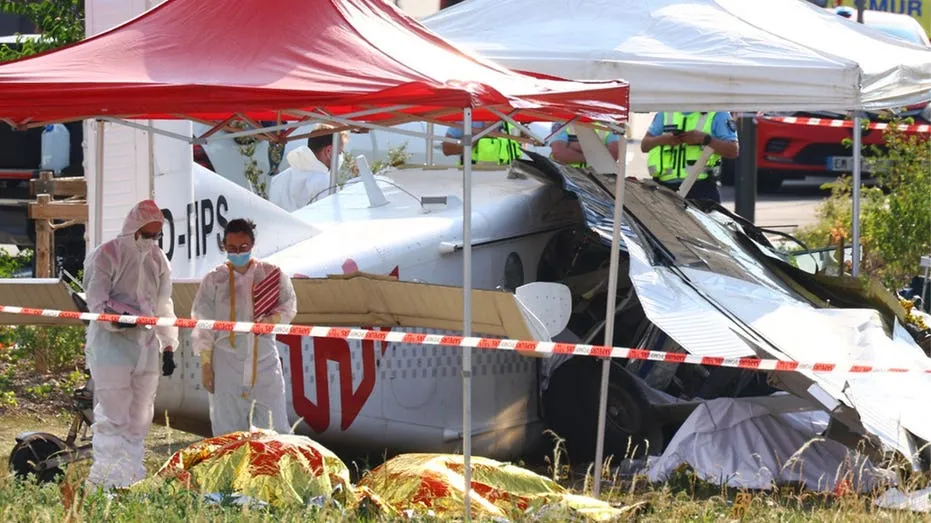
The catastrophic failure of the Pilatus PC-6 over Nancy is not just a statistical anomaly. It represents a terrifying blind spot in recreational aviation governance. Eleven people are dead. They fell from the sky in a machine that should have been the safest place in the air. The aircraft crashed moments after takeoff. It fell almost vertically. This trajectory indicates a total loss of lift or control authority. The fact that it missed a populated area is luck, not design. We are witnessing the deadliest skydiving accident in France in three decades. This event strips away the veneer of safety that surrounds the adventure tourism industry. It exposes the fragility of single-engine operations carrying heavy loads. The administrative machinery is now spinning up. But the physics of the crash were instantaneous and unforgiving. The governance structure failed to prevent the physics from turning lethal.
Official reports from the Meurthe-et-Moselle prefecture cite an “apparent malfunction.” Flight-tracking data from Flightradar24 shows a sharp bank to the left. Then, the signal vanished less than a minute into the flight. These are the dry, technical facts. The Pilatus PC-6 is a turboprop renowned for its Short Takeoff and Landing capabilities. It is a workhorse. But workhorses get tired. The “apparent malfunction” mentioned by officials is a vague placeholder for a complex mechanical chain reaction. The Bureau of Enquiry and Analysis for Civil Aviation Safety (BEA) has dispatched four investigators. They will parse the wreckage for clues. Transport Minister Philippe Tabarot has already framed the narrative. He calls it the country’s deadliest skydiving accident in thirty years. The state is activating its standard crisis protocols. A public information center is open. A hotline will run on Monday. Mayor Mathieu Klein is offering Marcel Picot Stadium for mourning. This is the governance response in action. It is structured, funded, and procedural. It treats the event as a data point to be managed.
The real social impact exposes the gap between regulation and reality. The victims included five first-time jumpers. They had no way to assess the airworthiness of the plane. They relied entirely on the regulatory framework to protect them. That framework failed. The pilot and five instructors also perished. This suggests the event was too sudden for human intervention. The “tremendous emotion” mentioned by Interior Minister Laurent Nuñez is a polite understatement. He confirmed relatives watched the aircraft fall. Watching a family member fall from the sky creates a specific, lifelong scar. The crash site, just 300 yards from the runway, turns the airfield into a crime scene. The proximity to populated areas highlights a zoning risk that officials often ignore. The “remarkable professionalism” of rescuers cannot undo the visual trauma imprinted on the witnesses. The social impact here is a total collapse of confidence in local flight safety.
The coming BEA report will likely focus on the specific mechanical failure. They will identify a broken part or a pilot error. They will recommend a new inspection regime for the Pilatus PC-6 fleet. This is the standard loop of aviation governance. We fix the last failure while ignoring the systemic risks. The industry relies on the skill of pilots to compensate for aging hardware. That is a dangerous governance model. We need predictive maintenance mandates, not just reactive investigations. The current system allows single-engine aircraft to carry heavy loads over populated areas. The risk calculus is flawed. The economic pressure on skydiving operators to maximize flights often conflicts with maintenance downtime. Small operators operate on thin margins. A grounded plane is a bankrupt plane. The governance bodies do not adequately police this friction. They rely on self-reporting. That is a conflict of interest. We need independent, randomized audits of these fleets. The current model is reactive. It waits for the smoking hole.
Author bio: Adrian Kingsley, an internationally renowned scholar who has long studied public administration and social policy.